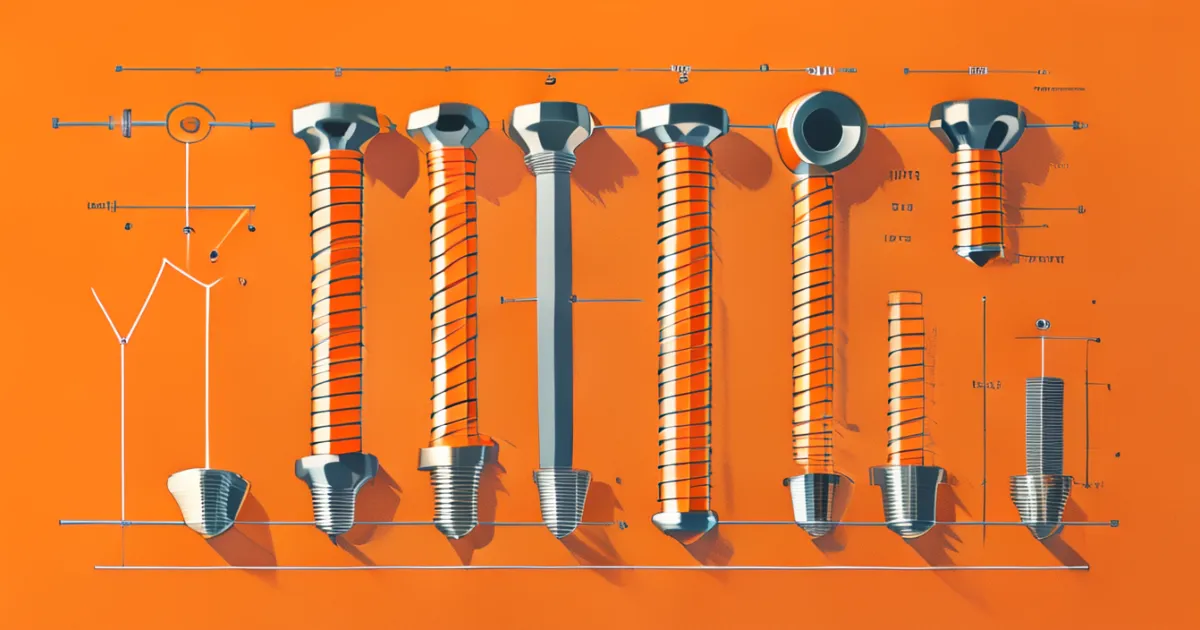
Self Tapping Screw Sizes Chart: Complete Reference
Comprehensive sizing guide for self-tapping screws including diameter, length, and thread pitch measurements with industry standard comparisons.

Ivy ChenTuesday, June 17, 2025
Step-by-Step Guide to Self Tapping Screw Sizes Selection
Getting self tapping screw sizes right is crucial for project success. Let me walk you through a systematic approach to selecting the perfect screw size for any application. This step-by-step process will help you avoid common mistakes and ensure strong, reliable connections every time.
Understanding Screw Size Fundamentals
Before diving into specific measurements, let's clarify the essential components that define self tapping screw sizes:
- Major Diameter: The largest diameter of the screw thread, measured across the thread crests
- Minor Diameter: The smallest diameter, measured across the thread roots
- Thread Pitch: The distance between adjacent threads, measured parallel to the screw axis
- Length: The distance from the screw tip to the underside of the head
These measurements work together to determine the screw's holding power, torque requirements, and material compatibility. Understanding how these dimensions interact helps you make informed decisions when selecting fasteners.
Imperial vs. Metric Sizing Systems
Self tapping screw sizes follow two primary measurement systems, and knowing both proves essential in today's global marketplace:
Imperial System (American)
- Number sizes: #0, #2, #4, #6, #8, #10, #12, #14
- Fractional sizes: 1/4", 5/16", 3/8", 1/2", etc.
- Thread counts: Threads per inch (TPI)
- Length increments: Typically in 1/8" or 1/16" increments
Metric System (International)
- Diameter: Measured in millimeters (M2, M2.5, M3, M4, M5, M6, M8, M10)
- Thread pitch: Measured in millimeters between threads
- Length: Measured in whole millimeters
- Coarse vs. fine: Different pitch options for each diameter
Common Self Tapping Screw Sizes by Application
Light-Duty Applications (Electronics, Small Applications)
- #2-56: 0.086" major diameter, 56 TPI - Ideal for small electronic components
- #4-40: 0.112" major diameter, 40 TPI - Perfect for lightweight plastic housings
- M2.5: 2.5mm diameter - Common in computer hardware and small devices
- M3: 3mm diameter - Standard for many electronic applications
Medium-Duty Applications (Automotive, Furniture)
- #6-32: 0.138" major diameter, 32 TPI - Excellent for sheet metal up to 1/16"
- #8-32: 0.164" major diameter, 32 TPI - Versatile for wood and metal
- #10-24: 0.190" major diameter, 24 TPI - Strong option for thicker materials
- M4: 4mm diameter - Common in automotive and machinery applications
- M5: 5mm diameter - Standard for many furniture assemblies
Heavy-Duty Applications (Construction, Industrial)
- #12-24: 0.216" major diameter, 24 TPI - Suitable for structural connections
- 1/4-20: 0.250" major diameter, 20 TPI - Excellent for wood framing
- 5/16-18: 0.3125" major diameter, 18 TPI - Heavy-duty metal applications
- M6: 6mm diameter - Common in structural steel applications
- M8: 8mm diameter - Industrial machinery and equipment
Length Selection Guidelines
Selecting the correct screw length depends on material thickness and desired thread engagement:
Minimum Thread Engagement Rules
- Soft materials (plastic, soft wood): At least 6-8 thread engagements
- Medium materials (hardwood, aluminum): 4-6 thread engagements
- Hard materials (steel, hardwood): 3-4 thread engagements
Calculating Required Length
Follow this simple formula: Required Length = Material Thickness + Pilot Hole Depth + 1-2 Thread Turns
Example: For 3/4" plywood with a 1/8" pilot hole depth using a #8 screw:
- Material thickness: 0.75"
- Pilot hole depth: 0.125"
- Thread engagement: 0.125" (approximately 4 thread turns)
- Total required length: 1.0" (use a 1" screw)
Thread Pitch Selection Considerations
The distance between threads significantly impacts performance:
Coarse Threads
- Advantages: Faster installation, better resistance to cross-threading, stronger in soft materials
- Best for: Wood, plastic, soft metals, quick assembly applications
- Common examples: #8-32, 1/4-20, M6 with 1.0mm pitch
Fine Threads
- Advantages: Better vibration resistance, stronger in hard materials, precise adjustment capability
- Best for: Metal-to-metal applications, vibration-prone environments, precision assemblies
- Common examples: #8-36, 1/4-28, M6 with 0.75mm pitch
Material-Specific Size Recommendations
Metal Applications
Self tapping screw sizes for metal must consider material hardness:
- Thin sheet metal (under 1/16"): #4 or #6 screws with short lengths
- Medium sheet metal (1/16" to 1/8"): #8 or #10 screws with appropriate length
- Thick metal (over 1/8"): #12 or 1/4" screws with full thread engagement
Pro tip: For steel over 1/8" thick, consider using metal self tapping screws with hardened construction and optimized thread geometry.
Plastic Applications
Plastic materials require special size considerations:
- Soft plastics (ABS, polyethylene): Use larger diameters to distribute load
- Hard plastics (polycarbonate, acrylic): Can use smaller diameters with proper pilot holes
- Reinforced plastics: May require specialized self tapping screw sizes with aggressive thread profiles
Material thickness rule of thumb: Screw diameter should not exceed 1/3 of material thickness to prevent cracking.
Wood Applications
Wood fastening depends on wood type and grain direction:
- Softwoods (pine, fir): Standard thread profiles work well
- Hardwoods (oak, maple): May require larger pilot holes or specialized threads
- Plywood/Particle board: Use washer heads to prevent material crushing
Length rule: Allow at least 1" of thread engagement beyond the first piece of material when joining wood pieces.
Pilot Hole Sizing for Different Screw Sizes
Proper pilot hole sizing is critical for optimal performance:
General Pilot Hole Guidelines
- Too small: Increases torque requirements, risks material damage
- Too large: Reduces thread engagement and holding power
- Just right: 75-85% of screw major diameter for most materials
Recommended Pilot Hole Sizes
| Screw Size | Recommended Pilot Hole | Material Type |
|---|---|---|
| #4 | 3/32" (2.38mm) | Soft materials |
| #6 | 1/8" (3.18mm) | Medium materials |
| #8 | 9/64" (3.57mm) | Most applications |
| #10 | 3/16" (4.76mm) | Hard materials |
| #12 | 7/32" (5.56mm) | Metal applications |
| 1/4" | 13/64" (5.16mm) | Structural applications |
Torque Specifications by Size
Proper torque varies significantly with self tapping screw sizes:
Approximate Torque Guidelines (inch-pounds)
| Screw Size | Soft Materials | Medium Materials | Hard Materials |
|---|---|---|---|
| #4 | 10-15 | 15-20 | 20-25 |
| #6 | 15-25 | 25-35 | 35-45 |
| #8 | 25-40 | 40-55 | 55-70 |
| #10 | 40-60 | 60-80 | 80-100 |
| #12 | 60-85 | 85-110 | 110-135 |
| 1/4" | 100-140 | 140-180 | 180-220 |
Important: These values are starting points. Always refer to manufacturer specifications and adjust based on material conditions and application requirements.
Common Mistakes to Avoid
- Using screws that are too long: Can cause breakthrough or damage to underlying materials
- Undersized pilot holes: Increases torque requirements and risks material splitting
- Oversized pilot holes: Reduces holding power and thread engagement
- Wrong thread pitch: Can cause poor engagement or excessive installation force
- Ignoring material properties: Different materials require different screw designs and sizes
Quick Reference Selection Guide
When in doubt, follow this simple selection process:
- Determine material type and thickness
- Calculate required screw length (material thickness + 1-2 thread turns)
- Select appropriate diameter (no larger than 1/3 of material thickness for thin materials)
- Choose thread pitch based on material and application requirements
- Verify torque specifications before installation
- Test fit on scrap material before committing to final installation
Remember that proper self tapping screw sizes selection balances strength requirements with material capabilities. When in doubt, it's better to consult with a fastener specialist or test on scrap material before proceeding with your project.
For more detailed information on different fastener categories, explore our comprehensive guide to self tapping screw types and learn about the important differences in our thread cutting vs thread forming comparison.