
Essential device safety and power protection explained

A surge protector is a device designed to safeguard electronic equipment from voltage spikes in electrical power. These protective devices divert excess voltage to ground, preventing damage to sensitive electronics. Learn more about whole house surge protector installation for comprehensive home protection.
Best Surge Protectors 2025: Complete Buyer's Guide
Top-rated surge protectors for every need and budget
Finding the right surge protector is crucial for protecting your valuable electronics from unexpected power surges, lightning strikes, and electrical fluctuations. Whether you need basic protection for home office equipment or comprehensive surge protection for gaming PCs and home entertainment systems, our guide covers the most reliable options that combine safety features, convenience, and value.
How to Choose the Right Surge Protector
Before selecting a surge protector, consider your specific protection needs and the value of equipment you're safeguarding. Key factors include joule rating (higher means better protection), clamping voltage (lower voltage activates sooner), response time (faster is better), and the number and type of outlets required. Also consider whether you need USB charging ports, indicator lights, or special features like wireless charging capabilities.
Key Features That Matter
Joule Rating: This measures how much energy the surge protector can absorb before failing. For basic electronics, 600-900 joules is adequate. For computers and entertainment systems, look for 1000-2000 joules. Gaming PCs and expensive equipment benefit from 2000+ joules of protection.
Clamping Voltage: This is the voltage level at which the surge protector activates to block excess voltage. Lower is better—330V is excellent, 400V is good, and 500V is minimum protection. Lower clamping voltage means your devices are protected sooner during a surge event.
Response Time: Measured in nanoseconds, this indicates how quickly the surge protector reacts. Look for under 1 nanosecond for the best protection. Faster response times mean less chance of damage reaching your connected devices during a power surge.
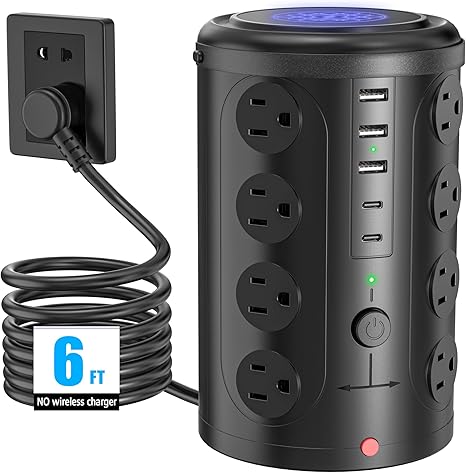
This comprehensive surge protector tower offers 16 AC outlets plus 5 USB ports (including 2 USB-C), making it perfect for home offices and entertainment centers. The vertical design saves desk space while providing 1875W power capacity. Built with advanced safety features including overload protection, short-circuit prevention, and lightning protection, this surge protector handles up to 21 devices simultaneously with its 360-degree rotating design and thoughtful cable management system.
Pros and Cons
Excellent 16 AC outlets capacity for multiple devices
5 USB ports including fast USB-C charging capability
Engineered for efficiency, this 16-in-1 surge protector combines 12 AC outlets with 4 USB ports in a compact tower design. The standout feature is 4-zone smart control with independent switches, allowing you to power down device groups separately to save energy. This surge protector provides robust protection with automatic shutoff technology, fire-resistant materials, and child-safe shutters, making it ideal for organized home and office setups where energy conservation matters.
Pros and Cons
4 independent switches for zone-based power control
Extended cord options up to 16.4 feet for flexible placement
15W USB-C fast charging technology included
Advanced surge protection with automatic safety shutoff
Premium pricing compared to basic surge protectors
This innovative surge protector tower features a revolutionary 0.3-inch flat-head plug that fits perfectly behind furniture and in tight spaces. With 12 AC outlets and 4 USB ports (2 USB-A, 2 USB-C), it delivers 1800J of surge protection with overload and short-circuit safeguards. The 45-degree angled outlet design prevents plug blockage, while smart USB charging delivers 30% faster charging than standard 5W chargers. Compact size and rubber feet ensure stable placement in any room.
Pros and Cons
Ultra-thin 0.3-inch flat plug fits in tight spaces
45-degree angled outlets prevent blocking
Fast USB-C charging 30% quicker than standard
1800J surge protection with overload safeguards
6-foot cord may be short for some applications
Wireless charging version costs significantly more
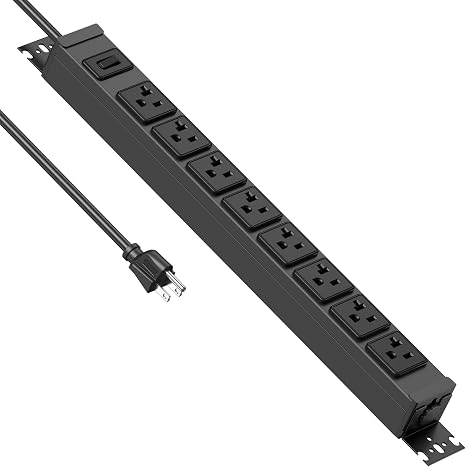
Built for demanding environments, this heavy-duty surge protector features rugged metal construction and 20-amp capacity for power-hungry tools and equipment. The 8-outlet design with widely spaced T-slot sockets accommodates large plugs without blocking. Mounting brackets allow flexible installation in workshops, garages, and industrial settings. With 1200J surge protection and overload protection that automatically trips during dangerous conditions, this surge protector is designed for professionals who need reliable power distribution and protection.
Pros and Cons
Heavy-duty metal construction for durability
20-amp capacity supports power-hungry equipment
Wall-mountable design for workshops and garages
1200J surge protection with automatic overload shutoff
This versatile surge protector combines 8 widely spaced AC outlets with 6 USB charging ports (1 USB-C, 5 USB-A) to handle up to 14 devices simultaneously. The flat plug design with 45-degree right-angle configuration maximizes space efficiency behind furniture. Offering total USB output of 17W with USB-C delivering up to 3A charging, this surge protector includes wall mounting options and anti-slip pads for secure placement. Multiple safety protections ensure devices remain safe from electrical hazards.
Offering the highest surge protection in our selection at 4800 joules, this premium power strip safeguards valuable electronics from lightning strikes and severe power spikes. The 16-in-1 design includes 12 AC outlets with 4 USB ports (2 USB-C, 2 USB-A), featuring 20W Power Delivery for rapid device charging. The ultra-thin 0.31-inch flat plug fits flush against walls, while the 10-foot extension cord provides flexible placement options throughout your home or office.
Remember that the best surge protector is one that matches your specific needs and the value of equipment you're protecting. Consider factors like warranty coverage, indicator lights that show protection status, and whether the surge protector automatically shuts down when protection fails. For high-value equipment like gaming PCs and home theaters, invest in higher joule ratings and lower clamping voltage. Don't wait until damage occurs—proactive surge protection is always more cost-effective than equipment replacement.
Protection Guides
Explore comprehensive guides covering all aspects of surge protection for your home and electronics.
UX researcher turned editor covering privacy, platforms, and humane design for real-world decisions.
Frequently Asked Questions
Get answers to common questions about surge protection and device safety
A surge protector includes built-in circuitry that blocks harmful voltage spikes, while a basic power strip only provides multiple outlets without protection. Surge protectors have joule ratings and safety features that power strips lack, making them essential for protecting valuable electronics from damage.
Replace surge protectors every 2-3 years or after any major surge event. Many units have indicator lights that show when protection is compromised. If your surge protector beeps or shows warning lights, replace it immediately—even if it still provides power, the protection circuitry may be failed.
For computers and gaming PCs, look for surge protectors with 1000-2000 joules minimum. Higher-value systems benefit from 2000+ joules. The joule rating indicates how much energy the device can absorb before failing, so higher ratings provide better protection for expensive equipment.
Surge protectors can help mitigate lightning-induced surges but cannot guarantee protection against direct lightning strikes. For comprehensive protection, consider whole-house surge protectors installed at your electrical panel, which provide the first line of defense against severe weather events.
USB ports are convenient for charging phones, tablets, and other devices while protecting them from power fluctuations. However, ensure the surge protector's USB ports also have surge protection—some models protect only AC outlets. USB-C ports with Power Delivery offer faster charging for compatible devices.
Clamping voltage is the voltage level at which the surge protector activates to block excess voltage. Lower is better—330V is excellent protection, 400V is good, and 500V is minimum. Lower clamping voltage means your devices are protected sooner during a surge event, reducing the risk of damage.
Never daisy-chain surge protectors or power strips. This practice creates fire hazards, reduces protection effectiveness, and can overload electrical circuits. Always plug surge protectors directly into wall outlets to ensure proper grounding and protection functionality.
Surge protection circuitry works as long as the device is plugged into a live outlet, regardless of whether the power switch is on. However, for maximum safety and energy efficiency, turn off surge protectors when not in use and during electrical storms for additional protection.
3-prong surge protectors provide proper grounding essential for effective surge protection. 2-prong units lack ground connection and offer significantly reduced protection. Always choose 3-prong surge protectors for sensitive electronics and ensure your outlets are properly grounded for maximum safety.
Absolutely. Home entertainment systems contain sensitive and expensive components that are vulnerable to power surges. Use surge protectors with enough outlets for all equipment (TV, sound system, gaming consoles, streaming devices) and consider models with coaxial or Ethernet protection if your setup uses cable or internet connections.