Better bread, without the gluten. Discover everything you need to know about gluten-free bread: from the best brands and homemade recipes to nutritional insights and practical tips.
The complete resource for making informed choices about gluten-free bread
Finding the perfect gluten-free bread doesn't have to be complicated. Whether you're newly diagnosed with celiac disease, managing gluten sensitivity, or choosing to eliminate gluten for health reasons, understanding your options is crucial. This comprehensive guide covers everything from store-bought brands to homemade recipes, helping you make informed decisions about your gluten-free bread journey. The gluten-free bread market has evolved significantly in recent years, with improved textures, better nutritional profiles, and more variety than ever before.
Discover best gluten-free bread brands with our comprehensive taste tests and reviews
Learn how to make gluten-free bread at home with step-by-step beginner guides
Master gluten-free bread machine recipes for foolproof automatic baking
Understand gluten-free bread vs regular bread nutrition for informed dietary choices
Find where to buy gluten-free bread near me with our local store guide
Explore gluten-free bread without xanthan gum using natural binding alternatives
Best Bread Makers for Perfect Gluten-Free Bread at Home
Professional-grade machines that make gluten-free bread baking effortless and delicious
Creating bakery-quality gluten-free bread at home has never been easier with the right bread maker. These specialized machines handle the complex mixing, kneading, and baking processes that gluten-free dough requires, eliminating the guesswork and ensuring consistent results every time. Whether you're new to gluten-free baking or an experienced home baker, investing in a quality bread maker can transform your homemade bread experience.
How to Choose the Right Bread Maker for Gluten-Free Baking
Selecting the perfect bread maker for gluten-free bread requires careful consideration of several factors. Gluten-free dough behaves differently from traditional wheat dough, often needing more thorough mixing and specific program cycles. Look for machines with dedicated gluten-free settings, as these provide the longer kneading and rising times that gluten-free bread requires. Consider your household size – larger families benefit from 2-3 pound capacity machines, while smaller households might prefer compact 1-2 pound models. The versatility of multiple programs ensures you can experiment with different gluten-free recipes, from basic sandwich bread to specialty varieties. Quiet operation is essential if you plan to use overnight cycles or have noise-sensitive household members. Finally, consider the ease of cleaning – non-stick pans and dishwasher-safe parts make maintenance effortless.
Key Features for Superior Gluten-Free Bread Results
Gluten-Free Program: Dedicated settings automatically adjust mixing time, rising periods, and baking temperature for optimal gluten-free bread texture. These programs typically extend the kneading cycle to 30-45 minutes and provide longer rising phases.
Dual Paddles: Machines with two kneading paddles ensure more thorough mixing of gluten-free flours and binders, preventing ingredient separation and creating uniform crumb structure.
Automatic Dispensers: Nut and yeast dispensers add ingredients at precisely the right moment during the mixing cycle, ensuring even distribution and optimal yeast activation for better rise and texture.
Viewing Window: Allows you to monitor the bread's progress without opening the lid, maintaining consistent temperature and humidity during the critical rising and baking phases.
Capacity Options: 1-2 pound capacity suits smaller households, while 2-3 pound models accommodate larger families or batch baking for weekly meal prep.
Timer Functions: Delay start and keep warm features let you schedule baking for fresh bread in the morning or maintain warmth for up to an hour after completion.
This high-performance 650W bread maker features 25 specialized programs including dedicated gluten-free settings. The innovative dual dispenser system automatically adds fruits, nuts, and yeast at optimal moments for perfect gluten-free bread texture. Large 2-pound capacity accommodates family-sized loaves, while the viewing window lets you monitor progress. Operates quietly at just 55dB and includes 13-hour delay timer for fresh bread anytime.
Pros and Cons
Dedicated gluten-free program with optimized mixing and rising cycles
Automatic fruit and nut dispensers ensure even ingredient distribution
Quiet operation at 55dB perfect for overnight baking
Premium price point compared to basic models
Large footprint requires significant counter space
This health-conscious bread maker features a food-grade ceramic inner pot that's heat-resistant and won't release harmful substances. The 650W motor provides powerful mixing for dense gluten-free doughs, while 19 programs cover everything from basic gluten-free bread to dough, jam, and cake. Includes 15-hour delay timer, 3 crust settings, and ingredient addition reminders for perfect timing.
Pros and Cons
Food-grade ceramic pan eliminates health concerns about traditional coatings
Comprehensive 19-program selection for various gluten-free recipes
15-hour delay timer and power interruption memory for convenience
This advanced bread maker features both fruit & nut dispensers and a separate yeast dispenser, ensuring perfect ingredient timing for gluten-free bread success. The 650W heating system provides 360° even heat distribution for golden crusts and fluffy interiors. Offers 25 programs including multiple gluten-free settings, 3 loaf sizes, and 3 crust colors. Quiet operation at 55dB with intuitive digital controls.
Pros and Cons
Unique dual dispenser system for both ingredients and yeast
25 customizable programs including multiple gluten-free options
Advanced noise reduction technology for quiet operation
This affordable bread maker delivers professional results with 19 preset menus including dedicated gluten-free, whole wheat, and French bread programs. The 550W motor handles dense gluten-free doughs efficiently, while 3 loaf size options (1, 1.5, or 2 pounds) provide flexibility for different household sizes. Features 15-hour delay timer, 60-minute keep warm function, and intuitive controls perfect for beginners.
Pros and Cons
Excellent value for money with comprehensive program selection
19 preset menus including dedicated gluten-free setting
Compact design ideal for smaller kitchens
Lower wattage may struggle with very dense gluten-free doughs
Basic design lacks advanced features of premium models
This premium bread maker features an intuitive touchscreen display for easy program selection and monitoring. Offers 25 programs including 14 bread types, 2 cake recipes, and 4 special menus, plus custom DIY programming. The automatic nut dispenser releases ingredients at optimal moments, while the 13-hour delay timer and 1-hour keep warm function provide maximum flexibility. Includes 3 loaf sizes and crust settings.
Pros and Cons
Intuitive touchscreen display for easy operation and monitoring
25 comprehensive programs with custom DIY options
Transparent lid and viewing window for process monitoring
Perfect for gluten-free baking beginners, this automatic bread maker offers 17 customized programs including dedicated gluten-free settings. The 600W motor provides powerful yet quiet operation at just 50dB, making it ideal for overnight baking. Large 2-pound capacity accommodates family-sized loaves, while the non-stick pan ensures easy cleanup. Features 15-hour delay timer and intuitive controls for effortless operation.
This specialized bread maker excels at both sourdough and gluten-free bread making with 17 dedicated programs. The 600W motor provides consistent performance for dense gluten-free doughs, while the automatic nut dispenser adds ingredients at perfect moments. Features sleek matte black design, 15-hour delay timer, and comes with complete accessory kit including measuring tools and recipe book. Compact 13x8x11" footprint saves counter space.
Pros and Cons
Specialized programs for both sourdough and gluten-free bread
Complete accessory kit with measuring tools included
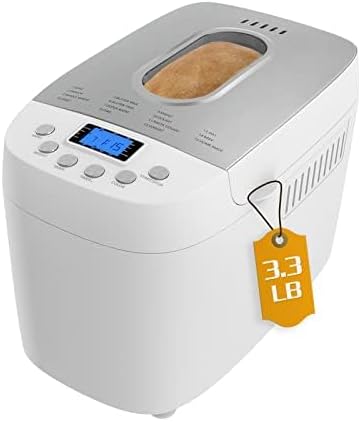
This powerhouse bread maker features dual kneading paddles and impressive 3.3-pound capacity, perfect for large families or meal prep. The 850W high-power motor handles even the densest gluten-free doughs with ease, operating at under 40dB for quiet performance. Includes 15 utility programs, large viewing window, and premium non-stick aluminum pan. Comes with spare paddles and comprehensive 1-year warranty.
Pros and Cons
Massive 3.3-pound capacity for large families or batch baking
Dual kneading paddles ensure thorough mixing of gluten-free dough
Powerful 850W motor handles dense doughs efficiently
Large footprint requires significant counter space
The best bread maker for your gluten-free baking journey depends on your specific needs and baking habits. If you're new to gluten-free bread making, consider starting with a mid-range model featuring a dedicated gluten-free program and viewing window. For larger families or those who enjoy meal prep, invest in a higher capacity machine with automatic dispensers. Remember that successful gluten-free bread making often requires experimentation – even with the best machine, you may need to adjust recipes and techniques to achieve your preferred texture and taste. Consider the availability of replacement parts and customer support when making your final choice, as a quality bread maker should last for years with proper care.
Explore Gluten-Free Bread Topics
Expert guides covering everything from buying tips to homemade recipes, nutrition insights, and practical advice for your gluten-free journey.
Health journalist translating medical research into clear, daily practices.
Frequently Asked Questions About Gluten-Free Bread
Expert answers to common questions about choosing and enjoying gluten-free bread
Gluten-free bread lacks gluten, the protein that gives traditional bread its structure and elasticity. This requires alternative ingredients like xanthan gum, psyllium husk, or eggs to provide binding and structure. Gluten-free breads typically use flour blends containing rice flour, tapioca starch, potato starch, and other gluten-free grains to achieve the right texture and taste.
Not necessarily. While essential for those with celiac disease or gluten sensitivity, gluten-free bread isn't inherently healthier. Many commercial gluten-free breads contain more sugar, additives, and calories than their wheat counterparts. However, homemade gluten-free breads using whole grains can be nutritious. The key is reading labels and choosing options with minimal processed ingredients and added sugars.
Gluten-free bread costs more due to specialized production requirements, expensive alternative flours, dedicated gluten-free facilities to prevent cross-contamination, and smaller production scales. The research and development required to create textures comparable to wheat bread also adds to costs. However, homemade gluten-free bread can be significantly more affordable than store-bought options.
Gluten-free bread dries out faster than regular bread due to different ingredients and moisture retention properties. Store it in an airtight container or resealable bag at room temperature for 2-3 days. For longer storage, slice and freeze immediately after cooling, then toast individual slices as needed. Refrigeration actually makes gluten-free bread stale faster, so avoid it unless you must keep it for more than a week.
Yes, freezing is actually the best way to extend the life of gluten-free bread. Slice it before freezing, separate slices with parchment paper, and store in freezer bags. Frozen gluten-free bread lasts 2-3 months. To use, toast directly from frozen or thaw at room temperature. Freezing maintains texture better than refrigeration and helps prevent the staling process.
Essential ingredients include a gluten-free flour blend (usually rice flour, tapioca starch, and potato starch), a binding agent (xanthan gum, psyllium husk, or ground flaxseed), eggs for structure, yeast or baking powder for leavening, salt for flavor, and often a sweetener like honey or maple syrup. Many recipes also include vinegar or buttermilk to improve texture and activate the baking soda.
Gummy or dense gluten-free bread usually results from under-baking, too much moisture, or insufficient binding agents. Gluten-free doughs often need longer baking times at slightly lower temperatures. Ensure your bread reaches an internal temperature of 200-205°F (93-96°C). Also, measure ingredients precisely – too much liquid or not enough binding agents can create gummy textures. Let the bread cool completely before slicing, as cutting too early can make it seem gummy.
Absolutely! While bread machines simplify the process, you can make excellent gluten-free bread using traditional methods. Mix ingredients by hand or with a stand mixer, allow proper rising time (often longer than wheat bread), and bake in a conventional oven. The key is thorough mixing and adequate rising time. Hand-kneaded gluten-free bread can develop excellent texture with proper technique and patience.
Look for certified gluten-free labels from organizations like the Gluten-Free Certification Organization (GFCO) or verify the product contains less than 20 ppm (parts per million) of gluten. Read ingredient lists carefully, avoiding wheat, barley, rye, malt, and Brewer's yeast. When in doubt, contact the manufacturer or choose products from dedicated gluten-free facilities. For homemade bread, ensure all ingredients are certified gluten-free and prevent cross-contamination in your kitchen.
Yes, gluten-free bread is safe for anyone to eat. However, it's generally not necessary unless you have celiac disease, gluten sensitivity, or wheat allergy. Some people choose gluten-free products for personal preference, but there's no scientific evidence supporting gluten-free diets for general health benefits in people without gluten-related conditions. Consider your individual health needs and consult with a healthcare provider or dietitian before making significant dietary changes.