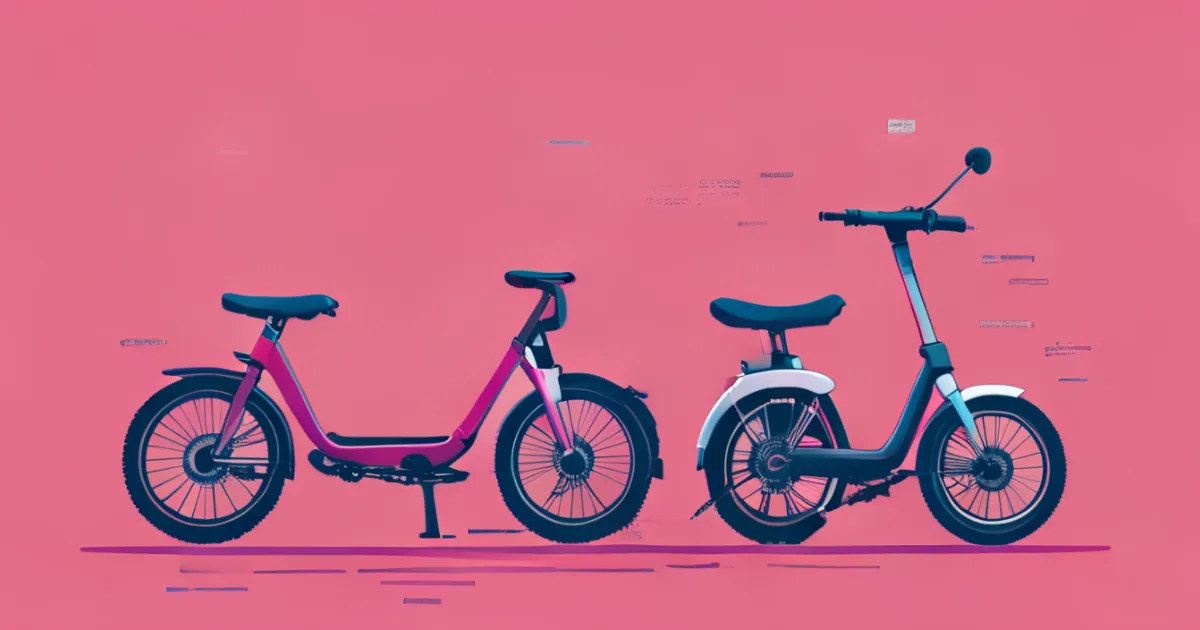
E-bike vs Electric Scooter: Which Is Right for You?
Compare electric bikes and scooters head-to-head. Learn the pros and cons of each option for commuting, cost, convenience, and fitness benefits.

Dylan HartWednesday, June 18, 2025
Physics in Motion: The Fundamental Differences Between Electric Bikes and Scooters
When you watch an electric bicycle glide past a street corner and an electric scooter zip by in the adjacent bike lane, you're witnessing two different solutions to the same physics problem: how to efficiently move a human through urban space. While both vehicles rely on electric motors and batteries, their underlying mechanical principles, energy transfer mechanisms, and rider engagement create fundamentally different transportation experiences.
Think of an electric bicycle as a power-assisted bicycle at its core—a traditional frame with human-powered pedals complemented by electric motor assistance. The rider remains an active participant in propulsion, with the electric system amplifying human effort rather than replacing it entirely. An electric scooter, by contrast, operates more like a standing platform with throttle-controlled acceleration, where the human role shifts from power provider to balance manager and controller.
These fundamental differences ripple through every aspect of performance, efficiency, and user experience. Understanding the physics behind each vehicle type helps explain why they excel in different scenarios and appeal to different types of riders. The choice between them often comes down to personal preference, intended use, and the specific transportation challenges you need to solve.
Energy Transfer and Human Power Integration
The most significant difference between electric bikes and scooters lies in how they transfer energy from power source to motion. Electric bicycles maintain the bicycle's traditional chain-driven system, with the electric motor either providing direct pedal assistance or supplementing the rider's effort through the drivetrain. This creates a smooth, natural-feeling power delivery that mirrors familiar bicycling sensations.
When you pedal an electric bicycle, you're actively contributing to forward motion. The motor's assistance typically feels like having a strong tailwind or suddenly becoming much stronger—it amplifies your effort rather than replacing it. This human-power integration means your energy expenditure directly correlates with your speed and effort level, creating an intuitive connection between effort and movement.
Electric scooters employ direct motor-to-wheel drive systems that bypass human power input entirely. The motor drives one or both wheels through belts or direct hub motors, with acceleration controlled by thumb or hand throttles. This creates instant torque delivery but eliminates the physical connection between rider effort and vehicle movement that characterizes bicycles.
The energy efficiency implications of these different approaches are substantial. Electric bicycles typically achieve longer range per battery charge because human power supplements motor output. During moderate pedaling, a rider might contribute 25-50% of total power requirements, significantly extending battery life. Electric scooters rely entirely on battery power, making them more energy-demanding per mile traveled but eliminating the requirement for physical exertion.
Stability and Handling Dynamics
The physics of stability differs dramatically between these two vehicle types, primarily due to their wheel configurations and rider positioning. Electric bicycles inherit the stability characteristics of traditional bicycles, with larger wheels (typically 26-29 inches) that provide gyroscopic stability and smooth rolling over uneven surfaces.
The bicycle's rider position—seated with hands on handlebars and feet on pedals—creates a low center of gravity and stable triangle of contact points with the vehicle. This configuration makes electric bicycles naturally stable at various speeds and predictable in handling characteristics. The larger wheel diameter also helps smooth out road imperfections and maintain traction across different surface conditions.
Electric scooters typically feature smaller wheels (8-12 inches) that offer less gyroscopic stability but provide greater maneuverability in tight spaces. The standing rider position raises the center of gravity compared to seated bicycles, making balance more critical, especially at lower speeds or during turning maneuvers.
However, scooter riders benefit from having both feet firmly planted on the deck platform, creating a wide, stable base that compensates for the higher center of gravity. The standing position also allows riders to shift their weight quickly to maintain balance during turns or when navigating obstacles. This weight-shifting capability gives scooters surprising agility despite their smaller wheel size.
These stability differences translate directly into riding comfort and confidence. Electric bicycles generally feel more stable and predictable, especially for riders with previous cycling experience. Electric scooters require some adaptation to their unique handling characteristics but offer quick learning curves and intuitive control once mastered.
Terrain Versatility and Surface Compatibility
The different wheel sizes and suspension systems make these vehicles suitable for different types of terrain. Electric bicycles, with their larger wheels and more sophisticated suspension options, handle varied terrain with greater ease. The increased wheel diameter helps roll over obstacles, while typical bicycle suspension systems absorb impacts effectively.
Most electric bicycles can handle everything from smooth pavement to gravel paths and light trail conditions without modification. The combination of larger contact patches, lower tire pressure options, and front suspension systems creates a versatile vehicle capable of navigating diverse urban and suburban environments. This terrain versatility makes electric bicycles ideal for riders who travel through varied surface conditions during their daily routes.
Electric scooters generally perform best on smooth, paved surfaces where their smaller wheels can maintain consistent contact with the ground. While some premium scooters feature suspension systems, their limited wheel travel and smaller diameter make them more susceptible to impacts from road imperfections. Potholes, gravel, and rough surfaces can create uncomfortable riding experiences and potentially damage smaller scooter wheels.
However, electric scooters excel in dense urban environments where smooth surfaces predominate and maneuverability through traffic is prioritized. Their compact size and responsive handling make them ideal for navigating crowded city streets, bike lanes, and pedestrian areas where larger bicycles might feel cumbersome.
The terrain preference of each vehicle type should align with your typical riding environment. If your routes include varied surfaces, hills, or less-developed infrastructure, an electric bicycle likely provides greater versatility. For purely urban commuting on well-maintained roads and bike paths, an electric scooter offers efficient, nimble transportation.
Speed Performance and Acceleration Characteristics
The physics of speed and acceleration reveal interesting differences between electric bikes and scooters, largely stemming from their weight distributions, power delivery systems, and mechanical efficiency. Electric bicycles typically achieve higher top speeds, with many models capable of reaching 28 miles per hour in pedal-assist mode.
The bicycle's advantage in top speed comes from several factors: larger wheels that maintain efficiency at higher velocities, gearing systems that optimize motor RPM for different speeds, and the additional power contribution from human pedaling. The combination of electric and human power creates higher total system output than scooter motors alone can provide.
Electric scooters generally top out between 15-25 miles per hour, with performance varying by motor power and wheel size. While their top speeds might be lower, electric scooters often provide more immediate acceleration from a stop due to their direct-drive systems and favorable power-to-weight ratios. The throttle-controlled acceleration delivers instant torque that feels responsive and powerful in urban start-and-stop traffic.
The speed difference becomes particularly noticeable on hills. Electric bicycles maintain their speed advantage through efficient gear systems that allow motors to operate at optimal RPM regardless of gradient. The addition of human power on climbs further extends this advantage. Electric scooters may struggle more on steep inclines, though powerful models can still perform respectably on moderate hills.
For urban commuting, the speed difference might be less significant than it appears on paper. In dense traffic conditions, both vehicles typically travel at similar speeds limited by traffic flow rather than vehicle capability. However, electric bicycles offer more flexibility for riders who occasionally want to travel faster, particularly on bike paths or in suburban areas with higher speed limits.
Range and Battery Efficiency
Battery range represents one of the most significant practical differences between electric bikes and scooters, primarily due to the human power contribution in bicycle operation. Electric bicycles typically achieve 40-100 miles per charge depending on assistance level, terrain, and riding conditions. This extended range comes from the hybrid human-electric power system that reduces battery drain.
When you ride an electric bicycle with moderate pedal assistance, you might provide 25-30% of total power requirements during steady cruising. The battery only needs to supply the remaining power, dramatically extending range compared to pure electric operation. Even at maximum assistance levels, human pedaling contributes meaningful energy that reduces battery consumption.
Electric scooters typically achieve 15-40 miles per charge, with performance varying by battery capacity, motor power, rider weight, and terrain. Without human power contribution, the battery must supply all energy for motion, creating higher energy consumption per mile traveled. However, scooter range can be quite efficient for riders who maintain consistent speeds and avoid aggressive acceleration.
The different range characteristics affect practical usage patterns significantly. Electric bicycle riders can often complete multiple days of commuting on a single charge, reducing the frequency of charging routines. Electric scooter users typically need to charge more frequently, though this becomes less burdensome with removable batteries that can be charged indoors.
Weather conditions also affect range differently for each vehicle type. Electric bicycles benefit from reduced human power contribution during strong headwinds, as the motor compensates for increased resistance. Electric scooters experience consistent battery drain regardless of weather conditions, making their range more predictable but potentially shorter in challenging conditions.
Portability and Storage Solutions
The physical dimensions and folding mechanisms of these vehicles create dramatically different portability and storage options. Many electric bicycles remain full-sized machines with limited folding capability, though folding e-bike models exist with increasing sophistication. Traditional electric bicycles typically require dedicated storage space similar to conventional bicycles.
Electric scooters generally excel in portability, with most models featuring folding handlebars and stems that create compact profiles suitable for storage in apartments, offices, and public transportation. The standing platform design allows for efficient folding mechanisms that reduce overall volume significantly.
The weight difference between vehicle types also impacts portability. Electric bicycles typically weigh 45-70 pounds due to their larger frames, wheels, and more robust construction. Electric scooters usually range from 25-40 pounds, making them easier to carry up stairs or lift onto public transportation. However, weight distribution matters—scooters often feel heavier to carry due to their concentrated mass, while bicycles can be rolled when partially folded.
Storage compatibility with living spaces and workplaces varies significantly between vehicle types. An electric scooter might fold small enough to store under a desk or in a closet, making it ideal for apartment dwellers with limited space. Electric bicycles typically require dedicated parking areas or storage rooms, potentially limiting their practicality for some users.
Public transportation integration also differs substantially. Most electric scooters meet size requirements for bus and train storage when folded, making them excellent for multimodal commuting. Electric bicycles may face restrictions on public transportation during peak hours, though folding e-bike models increasingly address this limitation.
Maintenance Requirements and Long-term Durability
The maintenance demands of electric bikes and scooters reflect their different mechanical complexity and wear patterns. Electric bicycles inherit the maintenance requirements of traditional bicycles, including chain care, brake adjustment, tire maintenance, and periodic tune-ups. The addition of electric components adds battery care, motor inspection, and electrical system checks to the maintenance schedule.
Bicycle chain systems require regular cleaning and lubrication to prevent wear and ensure efficient power transfer. Brake systems need periodic adjustment to maintain safe stopping performance. Tires may need replacement every 1,000-3,000 miles depending on riding conditions and tire quality. These maintenance requirements are familiar to most cyclists but represent ongoing responsibilities for electric bicycle owners.
Electric scooters feature simpler mechanical systems with fewer moving parts, reducing routine maintenance requirements. Most scooters use belt-driven systems that eliminate chain maintenance, and brake systems often require less frequent adjustment. However, scooter tires wear more quickly due to their smaller size and higher rotation speeds, often needing replacement every 500-1,500 miles.
The electrical systems in both vehicle types require attention, though maintenance needs differ. Electric bicycle motors and controllers typically prove very reliable, with most issues arising from battery degradation over time. Electric scooter electrical systems show similar reliability, though the standing position and exposure to weather elements can sometimes create additional challenges for electrical connections.
Long-term durability considerations favor electric bicycles for riders who prioritize longevity. Bicycle frames and components typically last many years with proper maintenance, and electric systems can often be replaced or upgraded as needed. Electric scooters, while simpler mechanically, may show wear more quickly due to their smaller components and higher stress operating conditions.
Safety Considerations and Rider Protection
Safety characteristics differ substantially between electric bikes and scooters, influencing rider risk profiles and protection strategies. Electric bicycles benefit from established safety standards and infrastructure compatibility, often integrating seamlessly into existing bicycle traffic patterns and legal frameworks.
The seated position on electric bicycles provides better stability and protection during falls compared to standing scooter positions. Bicycle riders can brace themselves using handlebars, pedals, and frame components during accidents, potentially reducing injury severity. The larger wheel size and better suspension systems of bicycles also provide more stable handling during emergency maneuvers.
Electric scooters require riders to maintain balance while standing, creating different risk profiles during falls. Without handlebars to grip or pedals to brace against, scooter riders have fewer options to control their body position during accidents. However, the standing position can allow some riders to jump clear of the vehicle in certain collision scenarios.
Visibility to other road users presents different challenges for each vehicle type. Electric bicycles typically follow established traffic patterns that other drivers expect, making their movements more predictable. Electric scooters, especially when used in mixed pedestrian areas, may create uncertainty for other road users unfamiliar with their capabilities and intentions.
Protective gear recommendations differ significantly between vehicle types. Electric bicycle riders typically benefit from standard cycling equipment including helmets, gloves, and protective eyewear. Electric scooter riders often require additional protection due to their standing position and different fall dynamics, including wrist guards, knee pads, and more robust footwear.
Cost Analysis and Investment Considerations
The financial investment required for electric bikes and scooters varies considerably, with each vehicle type offering different value propositions based on usage patterns and long-term ownership considerations. Electric bicycles typically represent larger upfront investments, with quality models ranging from affordable options to premium configurations.
Entry-level electric bicycles start around affordable price points, but models with quality components, longer range, and better performance often require substantial investment. Premium electric bicycles can approach significant costs, though these investments typically pay dividends through durability, performance, and long-term reliability. The higher initial cost reflects the complexity of bicycle frames, drive systems, and sophisticated electrical integration.
Electric scooters generally offer more accessible entry price points, with quality models available across various budget ranges. The simpler construction and fewer mechanical components help reduce manufacturing costs, making electric scooters more attainable for budget-conscious buyers. However, premium scooter models with extended range, enhanced suspension, and advanced features can approach bicycle-level pricing.
Long-term ownership costs tell a different story. Electric bicycles often prove more economical over extended ownership periods due to their durability and lower maintenance requirements. The ability to replace individual components and upgrade systems allows for continued use without complete vehicle replacement. Electric scooters may require more frequent replacement due to wear patterns and technological obsolescence.
Resale value considerations also differ between vehicle types. Quality electric bicycles tend to maintain better resale value due to their durability and established market demand. Electric scooters, while having robust secondary markets, may depreciate more quickly due to technological advancements and wear patterns.
User Experience and Lifestyle Integration
The daily experience of riding and owning electric bikes versus scooters creates fundamentally different lifestyle impacts and usage patterns. Electric bicycles typically integrate more naturally into existing routines for riders with cycling experience, offering familiar handling and riding positions that feel intuitive after short adaptation periods.
The physical engagement required by electric bicycle riding creates different psychological and health benefits compared to electric scooter use. While both provide electric assistance, bicycle riders maintain some level of physical activity that can contribute to fitness goals and overall well-being. This active transportation aspect appeals to riders seeking health benefits alongside mobility solutions.
Electric scooters excel in convenience and accessibility for riders prioritizing ease of use over physical engagement. The standing position and throttle operation create minimal learning curves, allowing riders to become competent quickly regardless of previous transportation experience. This accessibility makes scooters attractive to riders who might be intimidated by bicycle operation or seeking immediate transportation solutions.
Weather protection and seasonal usability differ significantly between vehicle types. Electric bicycles typically offer more options for fenders, racks, and weather protection accessories that enable year-round use. The seated position also provides some protection from road spray and wind. Electric scooters expose riders more directly to weather conditions, though some models incorporate weather protection features.
Storage and integration with living spaces present different lifestyle impacts. Electric scooters' compact folded profiles make them ideal for apartment living and workplaces with limited storage. Electric bicycles require dedicated storage solutions but may offer greater utility for riders carrying cargo or integrating transportation with other lifestyle activities like exercise or recreation.
Making the Right Choice: Decision Frameworks
Choosing between an electric bicycle and scooter requires evaluating your specific transportation needs, physical preferences, and usage patterns. Consider your typical routes, terrain challenges, and storage constraints when comparing these options. The right choice aligns with your lifestyle while meeting your practical transportation requirements.
Riders prioritizing exercise, versatility, and longer-range capabilities often find electric bicycles better suited to their needs. The ability to handle varied terrain, carry cargo, and maintain fitness while commuting creates compelling advantages for many users. Electric bicycles also offer better integration with existing bicycle infrastructure and legal frameworks.
Riders seeking maximum convenience, urban agility, and minimal physical effort typically prefer electric scooters. The compact size, easy storage, and simple operation make scooters ideal for short urban trips and multimodal commuting. Standing while riding might appeal to users seeking different transportation experiences than traditional cycling.
Budget considerations also influence decision-making. Electric scooters generally offer more accessible entry points, while electric bicycles provide better long-term value for riders making substantial investments. Consider both upfront costs and anticipated ownership duration when evaluating your options.
The Future of Personal Electric Transportation
Both electric bicycles and scooters will continue evolving as technology advances and market demands shift. Battery technology improvements will extend ranges and reduce charging times for both vehicle types. Motor efficiency gains will improve performance while reducing energy consumption. Materials science advances will create lighter, stronger frames and components.
Integration with digital transportation networks represents another frontier for both vehicle types. Smart connectivity features will enable route optimization, battery management, and integration with public transportation systems. These technological advances will blur some of the current distinctions between electric bikes and scooters while creating new capabilities and use cases.
Urban planning and infrastructure development will also influence the relative advantages of each vehicle type. Cities investing in bicycle infrastructure may create favorable conditions for electric bicycle adoption, while dense urban environments might continue favoring electric scooters for their space efficiency and maneuverability.
The choice between electric bicycles and scooters ultimately reflects personal preferences and specific transportation needs rather than absolute superiority of one design over another. Both vehicles represent significant advances in personal transportation, offering efficient, environmentally conscious alternatives to traditional automotive transportation for urban mobility.