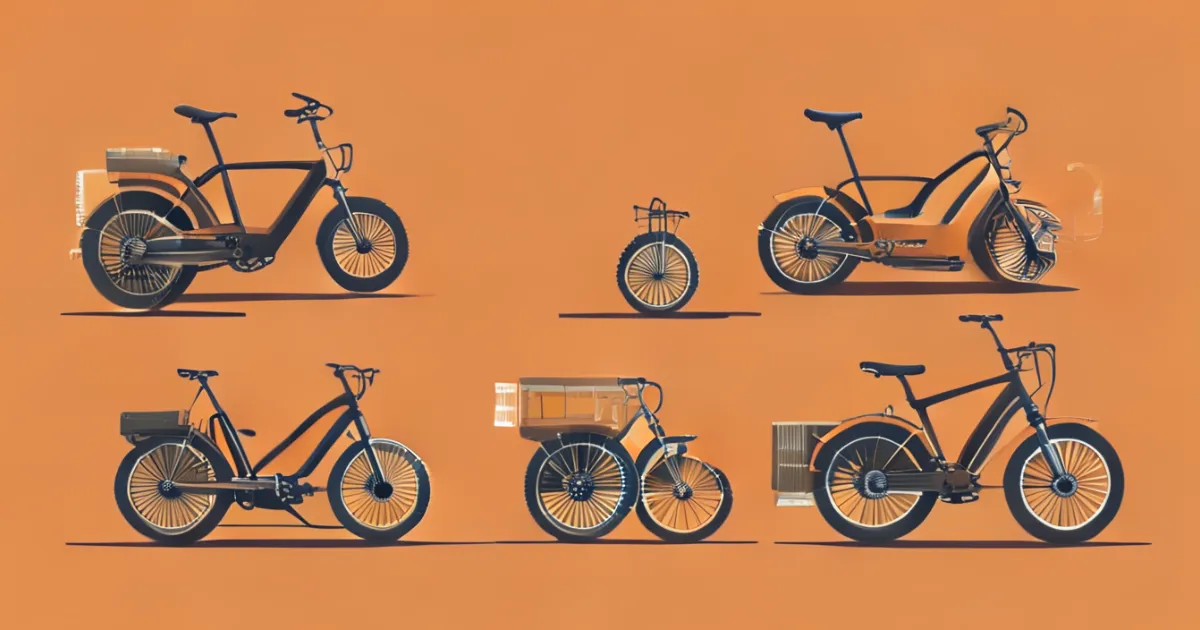
Cargo E-bike Reviews: Hauling Everything with Electric Power
Transform your transportation with electric cargo bikes. In-depth reviews of the best cargo e-bikes for families, businesses, and heavy-duty hauling needs.

Kai AdiyemiWednesday, June 18, 2025
Electric cargo bicycles represent one of the most significant transformations in urban transportation technology. These vehicles combine the efficiency of human-powered cycling with the practical capacity to replace car trips, creating opportunities for sustainable urban mobility that scale from individual families to commercial operations.
What makes cargo e-bikes different from other electric bicycles? The fundamental distinction lies in their purpose-built design for hauling rather than simple transportation. This design philosophy influences every aspect from frame geometry to power delivery, creating vehicles that function as electric utility platforms rather than merely assisted bicycles.
Family Transportation: Replacing Multiple Car Trips
Family cargo e-bikes have revolutionized how parents navigate urban environments with children. These bikes typically feature long-tail designs for multiple child seats or front-loading boxes for younger passengers. The emissions reduction potential is substantial—replacing even a few car trips per week with electric cargo transport yields measurable air quality improvements.
The lifecycle math tells a compelling story: while initial investment ranges from expensive to premium, operating costs remain dramatically lower than family vehicles. No fuel expenses, minimal insurance costs, and reduced maintenance requirements create compelling financial returns over five years of typical family use.
Safety features differentiate premium family models from basic alternatives. Integrated child seats with safety harnesses, protective roll cages, and weather covers create genuinely practical daily transportation solutions. Some models include backup cameras and turn signals, acknowledging that cargo e-bikes operate in mixed traffic environments alongside larger vehicles.
Real-world usage patterns reveal interesting adoption barriers. Weather resistance and storage requirements become critical considerations for year-round family transportation. Premium manufacturers respond with enclosed cargo boxes, heated seats, and advanced weather protection—features that add cost but dramatically improve practical adoption rates.
Commercial Applications: Delivery and Service Operations
Delivery companies are discovering cargo e-bikes represent strategic investments rather than environmental concessions. Total cost analysis reveals lower operating expenses over typical three-year service cycles, especially when factoring in reduced fuel costs, minimal maintenance requirements, and urban access advantages.
Urban delivery optimization benefits from cargo e-bike agility in congested environments. Delivery cyclists can park closer to destinations, navigate through bike infrastructure, and avoid parking restrictions that plague motor vehicles. This time advantage translates directly into improved delivery capacity and customer satisfaction metrics.
Service industry applications extend beyond package delivery. Plumbers, electricians, and maintenance technicians increasingly use cargo e-bikes for residential service calls. The carrying capacity for tools and equipment matches or exceeds what many service providers need for routine maintenance visits.
Infrastructure requirements represent scaling challenges for commercial operations. Secure charging stations, maintenance facilities, and storage solutions become critical investments at fleet scale. Forward-thinking municipalities are beginning to address these needs through dedicated cargo bike parking and charging infrastructure.
Technology Evolution: Power and Efficiency
Motor systems in cargo e-bikes emphasize torque over speed, recognizing that carrying heavy loads requires different performance characteristics than personal transportation. Mid-drive motors with advanced torque sensing provide responsive power delivery that adapts to load conditions automatically.
Battery capacity and management systems receive special attention in cargo applications. Extended range models offer 60-100 miles of assisted riding, crucial for commercial operations and heavy-load transportation. Smart battery management systems optimize power delivery and extend battery life under demanding conditions.
Braking systems demonstrate cargo-specific engineering priorities. Hydraulic disc brakes with larger rotors and advanced anti-lock technology provide reliable stopping power for heavily loaded vehicles in urban traffic conditions. Some premium models include regenerative braking, extending range while reducing wear on mechanical components.
Frame materials balance durability with weight considerations. Aluminum alloys dominate the market, offering corrosion resistance and reasonable weight characteristics. High-end manufacturers increasingly use advanced composite materials, though cost considerations limit widespread adoption.
Economic Impact: Total Cost Analysis
Initial investment represents the most significant adoption barrier for many potential users. Quality cargo e-bikes typically range from premium to luxury pricing, creating financial accessibility challenges despite long-term operational savings.
Financing options and subscription models are emerging to address upfront cost barriers. Municipalities and private companies offer lease-to-own programs, spreading costs over multiple years while making the technology immediately accessible to users who might otherwise defer purchase decisions.
Operational cost savings compound over time. Businesses calculating total cost of ownership find cargo e-bikes typically achieve break-even points within 2-3 years compared to traditional delivery vehicles. Family users experience similar financial benefits when replacing secondary car ownership.
Resale value considerations affect economic calculations differently across user segments. Commercial operations typically plan for 3-5 year replacement cycles, while family users may retain vehicles for longer periods. High-quality cargo e-bikes maintain strong resale values, particularly models from established manufacturers with robust support networks.
Urban Infrastructure: System Integration Challenges
Bike lane infrastructure design rarely considers cargo e-bike requirements. Standard lane widths often don't accommodate wider cargo vehicles, creating safety challenges for operators and other cyclists. Municipalities are beginning to address these limitations through dedicated cargo infrastructure and modified lane designs.
Parking solutions present another integration challenge. Cargo e-bikes require more space than standard bicycles and different parking arrangements than motor vehicles. Forward-thinking cities are implementing cargo-specific parking solutions that balance space efficiency with accessibility.
Regulatory frameworks continue evolving to address cargo e-bike classification. Different jurisdictions categorize these vehicles variously as bicycles, mopeds, or unique vehicle classes, creating compliance challenges for users operating across jurisdictional boundaries.
Multi-modal integration opportunities enhance cargo e-bike utility. Combined transportation strategies—using cargo e-bikes for last-mile delivery in conjunction with public transit or rail systems—expand effective range and capacity while maximizing efficiency gains.
Future Development: Emerging Technologies
Autonomous cargo bicycles are in development, promising to address labor challenges while maintaining sustainability benefits. Early prototypes focus on controlled environments like campuses and industrial complexes before expanding to more complex urban environments.
Swappable battery systems could dramatically improve operational efficiency, eliminating charging downtime through rapid battery exchange infrastructure. This approach mirrors successful electric scooter and motorcycle battery swap models already deployed in various urban markets.
Advanced materials development promises lighter, stronger cargo solutions without sacrificing durability. Carbon fiber composites and advanced aluminum alloys could reduce weight by 20-30% compared to current materials while maintaining or improving load capacity characteristics.
Connected technology integration enables fleet management optimization and enhanced safety features. GPS tracking, route optimization algorithms, and predictive maintenance systems improve operational efficiency while reducing total cost of ownership for commercial applications.
The cargo e-bike revolution represents more than transportation innovation—it's a fundamental reimagining of how people and goods move through urban environments. As cities become more congested and environmental concerns intensify, electric cargo bicycles offer scalable, sustainable solutions that address multiple urban challenges simultaneously.
Bottom line: Cargo e-bikes deliver genuine transportation transformation when implemented as part of integrated urban mobility strategies. Success requires addressing infrastructure, regulatory, and economic challenges alongside technological development. The combination of environmental benefits, operational efficiency, and urban livability improvements creates compelling arguments for continued investment and adoption.