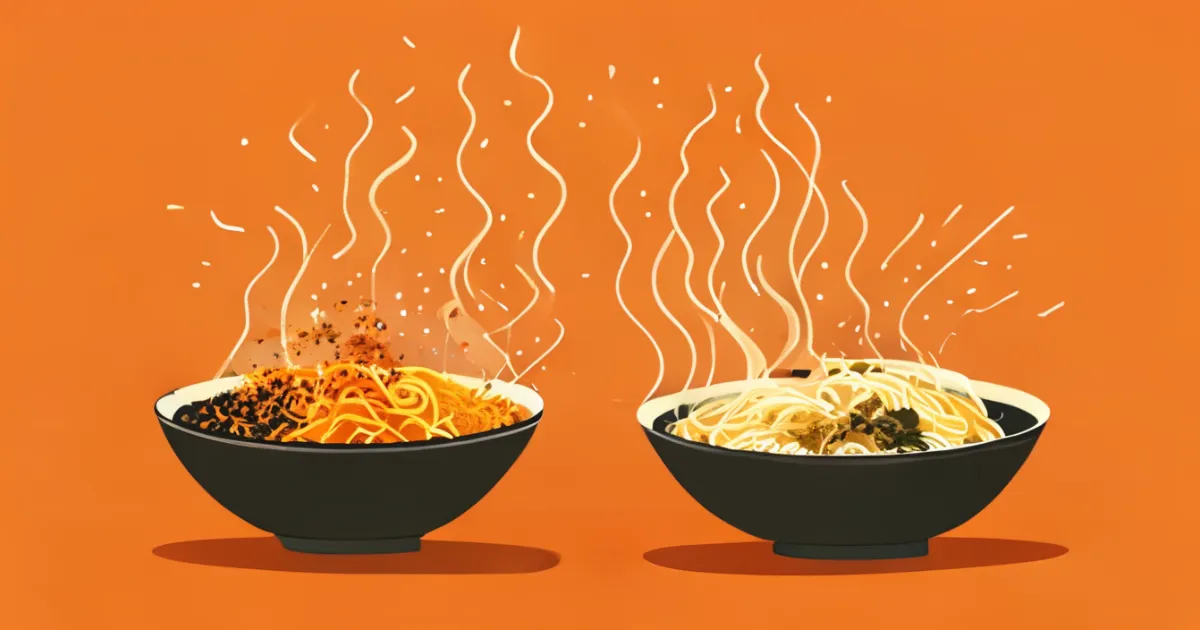
Togarashi Noodles Recipe: Spicy Japanese Ramen & Udon Dishes
Master the art of making togarashi noodles with authentic Japanese recipes. Learn to prepare spicy ramen, udon, and soba dishes using traditional seven-spice seasoning for perfect flavor balance.

Ivy ChenSunday, August 24, 2025
The Art of Togarashi Noodles
Togarashi noodles represent the perfect fusion of Japanese noodle traditions with the complex heat of seven-spice seasoning. This dish exemplifies Japanese culinary philosophy—simple, elegant techniques create extraordinary flavor through careful ingredient selection and precise seasoning balance. The togarashi noodle recipe transforms basic noodles into a sophisticated meal suitable for any occasion.
The beauty of this dish lies in its versatility. Whether using ramen, udon, soba, or even spaghetti, the togarashi seasoning adapts beautifully to create harmonious flavor profiles. Understanding how different noodle types interact with the spice blend allows you to create endless variations while maintaining the dish's essential character. The key is balancing the spice blend's heat with complementary flavors and textures.
Essential Ingredients and Noodle Selection
Choosing the right noodles forms the foundation of successful togarashi noodle dishes. Ramen noodles offer springy texture and neutral flavor that absorbs seasonings beautifully. Look for fresh or frozen varieties when available, as they provide superior texture compared to instant noodles. Udon noodles bring satisfying chewiness and wheat flavor that stands up well to bold seasoning. Their thickness makes them perfect for hearty, winter-style preparations.
Soba noodles contribute nutty, earthy notes and create lighter, more refined dishes. Buckwheat's distinctive flavor pairs exceptionally well with togarashi's citrus elements. Rice noodles offer gluten-free options and absorb flavors rapidly, making them ideal for quick preparations. Even spaghetti or linguine work in fusion-style togarashi noodle dishes, proving this seasoning blend's versatility across culinary traditions.
The togarashi seasoning should be freshly prepared for maximum flavor impact. While commercial versions work in a pinch, homemade blends provide superior aroma and heat control. Prepare extra to use in marinades, toppings, and finishing sprinkles throughout your meal preparation.
Classic Togarashi Ramen Recipe
This togarashi ramen recipe creates a restaurant-quality bowl at home using accessible ingredients and straightforward techniques. Begin by cooking ramen noodles according to package directions, then drain and set aside while preparing the broth.
For the base broth, combine dashi stock, soy sauce, mirin, and a touch of sesame oil in a saucepan. Heat until just simmering, then add fresh spinach leaves and sliced mushrooms. Cook until vegetables are tender-crisp, about 3-4 minutes. Stir in togarashi seasoning gradually, tasting after each addition to achieve your desired heat level.
Assemble the bowl by arranging cooked noodles in deep serving bowls. Ladle hot broth and vegetables over noodles, then top with soft-boiled eggs, sliced green onions, and additional togarashi seasoning. Add protein like chashu pork, grilled chicken, or tofu for heartier versions. Finish with a sprinkle of sesame seeds and nori strips for authenticity.
Spicy Udon with Togarashi
Thick udon noodles provide satisfying chewiness that stands up beautifully to togarashi seasoning's bold flavors. This preparation showcases the spice blend's ability to transform simple ingredients into memorable meals.
Start by cooking udon noodles in boiling water until al dente. While noodles cook, prepare the sauce by combining soy sauce, rice vinegar, a small amount of sugar, and a generous amount of togarashi seasoning. Sauté garlic and ginger in sesame oil until fragrant, then add the sauce mixture and bring to a simmer.
Add blanched broccoli and shredded carrots to the sauce, cooking until vegetables are tender-crisp. Toss cooked noodles into the sauce and vegetables, coating everything thoroughly. Finish with fresh cilantro and additional togarashi seasoning. This dish works well served warm or at room temperature, making it perfect for lunch boxes or casual dinners.
Cold Soba with Togarashi Dressing
This refreshing cold soba noodle dish highlights togarashi's citrus elements while providing a lighter alternative to hot noodle preparations. The cold preparation makes it perfect for summer meals or as an elegant starter for Japanese-themed dinners.
Cook soba noodles according to package directions, then rinse thoroughly under cold water until completely cool. Toss with a small amount of sesame oil to prevent sticking. Prepare the dressing by whisking together rice vinegar, soy sauce, a touch of honey, and togarashi seasoning. Adjust seasoning balance to your preference, remembering that cold preparations often require more seasoning.
Compose the salad by arranging chilled soba noodles over a bed of mixed greens. Top with thinly sliced cucumber, shredded carrots, and edamame beans. Drizzle with togarashi dressing and finish with toasted sesame seeds and additional seasoning. Add protein like grilled shrimp or tofu for substantial main-dish versions.
Fusion Togarashi Pasta Applications
The versatility of togarashi seasoning extends to Italian-style pasta preparations, creating exciting fusion dishes that bridge Eastern and Western culinary traditions. These applications demonstrate the spice blend's adaptability across different noodle types and cooking methods.
Togarashi carbonara replaces traditional black pepper with the seven-spice blend, adding complexity and gentle heat to the creamy sauce. Prepare pasta al dente, then toss with a sauce of eggs, Parmesan, and togarashi seasoning. The citrus notes in the spice blend cut through the richness beautifully, creating balance without overwhelming traditional carbonara flavors.
Togarashi arrabbiata transforms the spicy tomato sauce by adding layers of flavor beyond simple heat. Simmer crushed tomatoes with garlic, olive oil, and generous togarashi seasoning. The blend's citrus and umami elements add depth to the acidic tomato base, creating a more complex and satisfying sauce than traditional versions.
Togarashi aglio e olio offers another simple yet sophisticated application. Sauté garlic in olive oil until fragrant, then add togarashi seasoning and toss with pasta. The oil carries the spice blend's flavors beautifully while allowing individual elements to shine through.
Protein Variations and Additions
Protein choices significantly influence togarashi noodle dishes, affecting both flavor profiles and nutritional content. Understanding how different proteins interact with the spice blend helps create balanced, satisfying meals.
Marinated tofu provides plant-based protein that absorbs togarashi flavors beautifully. Press firm tofu thoroughly, then marinate in soy sauce, ginger, and togarashi seasoning before grilling or pan-frying. Crispy edges contrast nicely with tender noodles and create interesting textural contrasts.
Grilled chicken or pork benefits from togarashi marinades that penetrate meat while creating flavorful crusts. The spice blend's citrus elements help tenderize proteins while adding complexity beyond simple salt and pepper seasoning. Slice grilled proteins thinly to distribute flavor evenly throughout noodle dishes.
Seafood options like shrimp, scallops, or white fish cook quickly and complement togarashi's bright flavors. The citrus notes in the spice pair particularly well with seafood's natural sweetness. Quick cooking methods preserve seafood's delicate texture while allowing proper seasoning absorption.
Seasonal Variations and Ingredient Swaps
Togarashi noodle recipes adapt beautifully to seasonal ingredients, allowing year-round enjoyment while taking advantage of peak freshness. Seasonal variations keep the dishes exciting and sustainable by incorporating local, available ingredients.
Spring versions incorporate tender greens like spinach, pea shoots, and blanched asparagus. Add fresh herbs like cilantro or mint for additional brightness. The light, fresh ingredients pair perfectly with togarashi's citrus-forward notes, creating refreshing preparations perfect for warmer weather.
Summer preparations feature chilled noodle salads with cucumber, cherry tomatoes, and bell peppers. The cold preparations showcase togarashi's versatility while providing cooling meals during hot months. Consider adding tropical fruits like mango or pineapple for unexpected sweet heat contrasts.
Fall and winter dishes hearten with roasted vegetables like butternut squash, sweet potatoes, and Brussels sprouts. The caramelized sweetness of roasted vegetables balances togarashi's heat beautifully while creating satisfying, warming meals. Add mushrooms for additional umami depth and textural interest.
Storage and Meal Preparation Tips
Successful togarashi noodle meals often depend on proper ingredient preparation and storage techniques. Planning ahead ensures consistent quality while making weeknight meal preparation efficient and stress-free.
Component preparation works well for togarashi noodle dishes. Cook and cool noodles ahead, store in airtight containers, and simply toss with sauce before serving. Pre-chopped vegetables and pre-mixed sauces save time during busy weekdays while maintaining fresh flavors.
Protein preparation benefits from batch cooking. Grill or roast proteins in advance, then store in portion-sized containers for easy addition to noodle dishes throughout the week. This method works particularly well for chicken, tofu, and roasted vegetables.
Sauce storage requires attention to ingredient freshness. Store togarashi-seasoned sauces in glass containers with tight-fitting lids, refrigerated for up to one week. The flavors often improve overnight, allowing components to meld and deepen. Bring sauces to room temperature before serving for optimal flavor development.
Mastering togarashi noodle recipes opens up endless culinary possibilities while connecting you to Japanese flavor traditions. Experiment with different noodles, proteins, and seasonal ingredients to create personalized versions that suit your taste while honoring the spice blend's sophisticated balance.