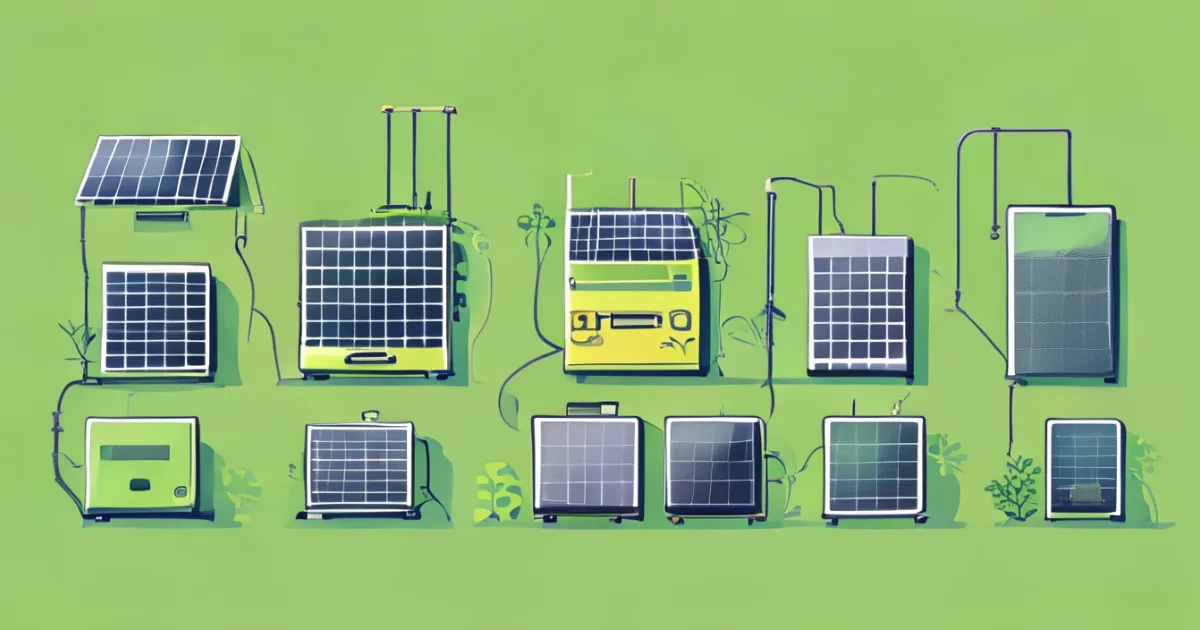
Portable Power Station with Solar Panel: Best Combinations 2024
Discover the most efficient portable power station and solar panel combinations for your needs. We test real-world performance, charging times, and power output to help you make the smart choice.

Kai AdiyemiSunday, August 24, 2025
Finding the Perfect Portable Power Station and Solar Panel Match
The right portable power station with solar panel combination transforms sunlight into reliable electricity wherever you need it. But matching these components isn't as simple as buying any battery pack and any solar panel. Optimal performance requires understanding how power generation, storage capacity, and your specific usage patterns interact. Whether you're planning extended camping trips, preparing for emergency backup, or setting up remote work capabilities, the perfect pairing ensures you have power when you need it most.
Modern portable power stations come in various capacities, typically ranging from 200 to 2,000 watt-hours, while solar panels span from 50 to 400 watts each. The magic happens when these components work in harmony—your solar panels need enough capacity to replenish your battery within reasonable sunlight hours, while your power station must store sufficient energy for your actual usage patterns. Getting this balance right means understanding not just specifications, but how real-world conditions affect performance.
Power Capacity Calculations for Real-World Use
Before diving into specific combinations, calculate your actual power needs. List all devices you plan to run, noting their wattage requirements and usage duration. A laptop might draw 60 watts for 6 hours (360Wh), while LED lights could consume 10 watts for 8 hours (80Wh). Add buffer for charging phones, running small fans, or powering communication devices. Most people discover their actual needs fall between 500-1,500Wh per day, which helps narrow down appropriate power station sizes.
Solar panel capacity should typically represent 20-30% of your power station's total capacity for optimal charging cycles. For example, a 1,000Wh power station pairs well with 200-300W of solar panels. This ratio ensures you can fully recharge your battery during 4-6 hours of good sunlight, accounting for real-world efficiency losses due to weather, panel positioning, and temperature. Higher panel capacity allows faster charging and more flexibility with weather conditions, while lower capacity requires longer charging times but costs less initially.
Performance Testing and Real-World Efficiency
Laboratory specifications rarely match field performance, so understanding real-world efficiency is crucial. Solar panels typically operate at 70-85% of their rated output due to factors like imperfect sun angle, dust accumulation, and temperature effects. A 200W panel might realistically generate 140-170W during peak sun hours. Similarly, power station efficiency losses during charging, discharging, and power inversion mean stored energy delivers only 85-90% of its rated capacity to your devices.
Testing reveals that panel orientation dramatically affects performance—panels angled directly at the sun generate up to 40% more power than flat-mounted panels. Weather conditions create significant variations too; cloudy skies might reduce output to 10-30% of rated capacity, while light haze or high temperatures can decrease efficiency by 15-20%. Understanding these variables helps size systems appropriately rather than relying on ideal laboratory conditions.
Top Combinations by Use Case
Camping and Recreation
For camping trips lasting 2-5 days, combinations featuring 500-1,000Wh power stations with 100-200W solar panels work well. These setups power LED lighting, phone charging, small fans, and basic cooking appliances while remaining portable enough for car camping. The EcoFlow River series paired with their 110W solar panel offers excellent portability, while Goal Zero Yeti 500X with Boulder 100 panels provides proven reliability in outdoor conditions.
Emergency Home Backup
Home emergency preparedness requires larger systems—1,500-2,000Wh power stations with 300-400W of solar panels provide enough capacity for critical devices like medical equipment, communication devices, and essential appliances. The Jackery Explorer 1500 combined with 300W solar panels can run a refrigerator intermittently while keeping phones and emergency lights powered. These larger systems sacrifice some portability for the ability to maintain household functionality during extended outages.
Remote Work Solutions
Digital nomads and remote workers need systems balancing portability with capacity to power laptops, monitors, and communication equipment. Power stations in the 1,000-1,500Wh range with 200-300W solar panels provide several days of autonomy while remaining transportable. The Bluetti AC200P with 200W solar panels offers exceptional battery life and multiple output options, while maintaining reasonable weight for mobile work setups.
Charging Speed and Battery Technology
Battery chemistry significantly impacts performance and longevity. Lithium iron phosphate (LiFePO4) batteries, found in premium models like EcoFlow Delta and Bluetti systems, offer 2,000+ charge cycles compared to 500-800 cycles for standard lithium-ion batteries. This longer lifespan makes them cost-effective despite higher initial prices, especially for frequent users.
Charging speed varies by technology—some systems support solar charging up to 800W input using MPPT (Maximum Power Point Tracking) controllers that optimize panel output. These advanced charging systems can replenish large batteries in 2-4 hours under ideal conditions, compared to 6-8 hours with simpler PWM controllers. When choosing combinations, prioritize systems with MPPT technology for faster, more efficient solar charging.
Weather Resilience and Environmental Factors
Real-world operation demands systems that handle diverse weather conditions. Look for power stations with IP65 or higher weather resistance ratings, meaning they're protected against dust and low-pressure water jets. Solar panels should feature durable frames and weatherproof connectors to withstand wind, rain, and temperature extremes.
Temperature management affects both charging efficiency and battery health. Most systems operate best between 32-95°F (0-35°C), with performance declining outside this range. Some premium systems include temperature compensation technology that adjusts charging parameters based on ambient conditions, protecting battery health while maintaining efficiency in varied weather.
Cost Analysis and Value Considerations
While initial costs range significantly, lifetime value depends on your usage patterns. Budget combinations (power station 300-500Wh with 100W panels) might cost less initially but require careful power management. Mid-range systems (1,000Wh with 200W panels) offer the best balance of capacity, portability, and value for most users. Premium setups (1,500Wh+ with 300W+ panels) provide maximum capability but cost significantly more.
Calculate cost per watt-hour when comparing systems—premium models often offer better long-term value despite higher upfront prices due to superior battery chemistry and efficiency. Consider warranty coverage too; quality manufacturers typically offer 2-3 years on power stations and 1-2 years on solar panels, providing confidence in long-term reliability.
Setup Optimization and Usage Tips
Maximize your system's performance through proper setup and usage patterns. Position solar panels where they'll receive uninterrupted sunlight from at least 9 AM to 3 PM, adjusting angles throughout the day as the sun's position changes. Keep panels clean using soft cloths and water—dirt accumulation can reduce efficiency by up to 25%.
Power station placement matters too—locate units in shaded areas with good airflow to prevent overheating during charging cycles. Avoid direct sunlight on the battery unit itself, as excessive heat can reduce battery lifespan. Use energy-efficient devices and power management techniques to extend runtime between charges, turning off unused devices and using power strips to eliminate phantom loads.
When exploring combinations, consider how solar generator portable power station systems might serve as complete solutions rather than mixing components from different manufacturers. Integrated systems often provide better compatibility and optimized performance compared to piecemeal arrangements.
For lighter power needs, understanding how small portable power station options can be scaled with appropriate solar panels helps create flexible systems that adapt to changing requirements while maintaining efficiency and reliability.
The right portable power station with solar panel combination provides not just electricity, but energy independence wherever your adventures or circumstances take you. By understanding your actual needs and matching components appropriately, you create a system that delivers reliable power whenever and wherever you need it most.