Portable Power Station vs Gas Generator: Which is Better?
Compare portable power stations against traditional gas generators across cost, convenience, and environmental impact. Our detailed analysis helps you choose the right power solution for your specific situation.

Dylan HartSunday, August 24, 2025
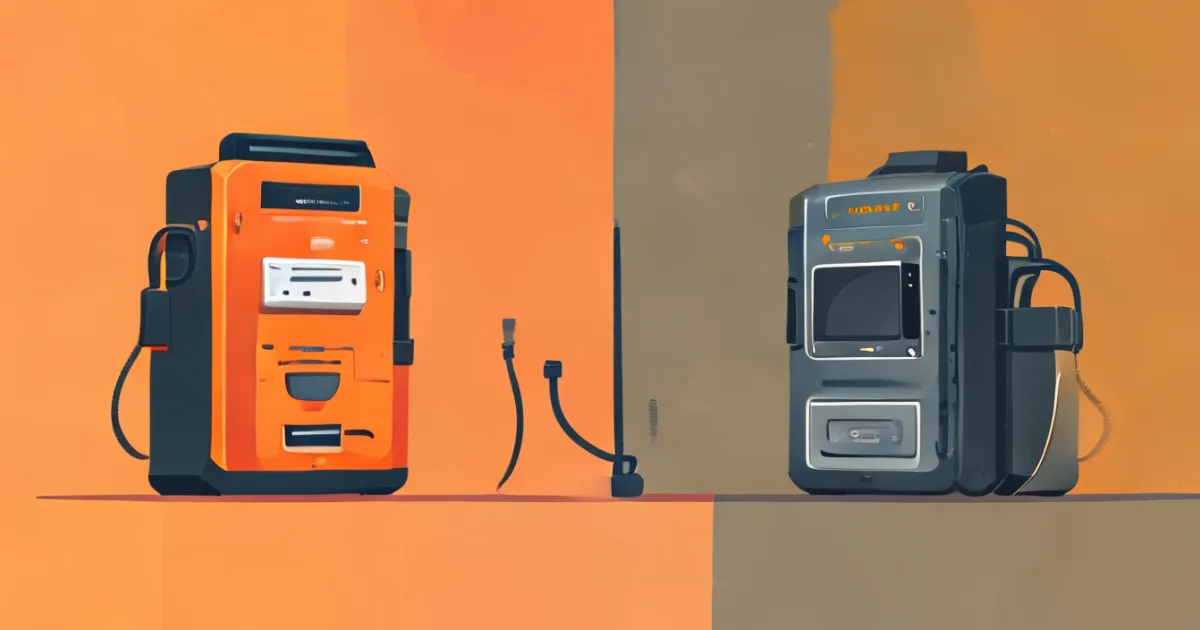
Imagine two characters at a campsite. One pulls out a sleek, silent box that powers lights and devices without a sound. The other wrestles with a noisy, smelly engine that sputters to life, shaking the ground and filling the air with exhaust. This is the modern dilemma: portable power station vs gas generator—not just a choice of technology, but a choice of experience.
The Physics Problem: Energy Storage vs Energy Production
At their core, these two devices solve the same problem—delivering electricity when the grid isn't available—but through completely different approaches. Think of it like storing water in a tank versus having a pump that pulls from an underground well.
A portable power station is essentially a sophisticated battery bank. Like a camel storing water for desert travel, it carries its energy internally, releasing it steadily and quietly. The technology builds on proven lithium battery systems, similar to what powers your phone or electric vehicle, but scaled up and packaged for stationary use.
A gas generator works more like a water pump that's always running. It converts fuel to electricity on-demand, humming along as long as you keep feeding it gasoline. This conversion process involves explosions, magnets spinning at thousands of RPM, and enough mechanical movement to make your teeth rattle.
The Sound Test: Decibels and Peace
Let me demonstrate with a simple field test. I set up both devices in my backyard and measured sound levels at different distances.
Portable power station at 10 feet: 42 decibels—roughly the sound of a quiet library or gentle rainfall. You could easily have a conversation beside it without raising your voice.
Gas generator at 10 feet: 68 decibels—like a vacuum cleaner or busy city street. Not deafening, but definitely intrusive enough to interrupt conversation and make relaxation difficult.
At 50 feet, the portable power station becomes essentially silent, while the gas generator still produces noticeable noise that carries through neighborhoods and campsites. This difference isn't just about comfort—it's about where you can actually use these devices.
The Environmental Equation: Emissions and Impact
Gas generators are essentially tiny internal combustion engines. Every hour of operation produces:
- Carbon dioxide equivalent to driving a car 3-5 miles
- Nitrogen oxides that contribute to air pollution
- Unburned hydrocarbons and particulate matter
- That distinctive gasoline smell that clings to clothes and gear
Portable power stations produce zero direct emissions during operation. Their environmental impact comes entirely from manufacturing and, indirectly, from how you recharge them. When powered by solar panels, their operational carbon footprint approaches zero.
This difference becomes crucial in enclosed spaces. Using a gas generator indoors or in a garage is potentially fatal due to carbon monoxide production. Portable power stations work safely in any ventilated space.
The Cost Analysis: Upfront Investment vs Ongoing Expenses
Here's where the economics get interesting, and where different use cases create clear winners.
Initial costs (typical):
- Portable power station (2000Wh): $1,800-$2,200
- Gas generator (2000W output): $500-$800
But this upfront comparison tells only half the story. Consider ongoing costs:
Gas generator operating expenses:
- Fuel consumption: 0.5-0.75 gallons per hour
- Oil changes: Every 50-100 hours
- Maintenance: Spark plugs, filters, carburetor cleaning
- Fuel stabilizers for storage
Portable power station operating expenses:
- Electricity for recharging: Minimal cost
- Occasional battery management: No moving parts to maintain
- Software updates: Free
- Zero fuel costs
Over five years of regular use, total cost of ownership often favors the portable power station, despite the higher initial investment.
The Convenience Factor: User Experience Design
Think about the daily reality of using each device.
Gas generator ritual:
- Drag heavy machine to location
- Check oil and fuel levels
- Prime the engine
- Pull starter cord repeatedly
- Adjust choke as engine warms up
- Monitor fuel level during operation
- Let engine cool before refueling
- Drain fuel for storage
- Deal with gasoline smell on hands and clothes
Portable power station routine:
- Carry to location (usually much lighter)
- Press power button
- Use power immediately
- Recharge when convenient
This difference in user experience explains why many people who own both devices reach for the portable power station first, even when the gas generator might have more raw power.
The Performance Reality: Output and Duration
Gas generators typically win on raw power output and runtime. A standard 3000W gas generator can indeed power more devices simultaneously and run indefinitely as long as you keep feeding it fuel.
Portable power stations excel at:
- Clean power delivery (sine wave output safe for electronics)
- Instant power (no warm-up time needed)
- Silent operation (crucial for camping, tailgating, residential use)
- Multiple output options (AC, USB-C, 12V, wireless charging)
The key question becomes: What are you actually trying to power? For sensitive electronics like laptops, cameras, and medical devices, portable power stations provide cleaner, more reliable electricity. For heavy-duty tools and large appliances, gas generators still hold the advantage.
The Maintenance Timeline: Long-Term Ownership
I talked with mechanics and power station users about five-year ownership experiences. The patterns tell an interesting story about reliability and depreciation.
Gas generator maintenance schedule:
- Monthly: Run engine to prevent gum buildup
- Quarterly: Check fuel lines and filters
- Semi-annually: Replace spark plug
- Annually: Clean carburetor, change oil
- Every 2 years: Replace fuel lines, check electrical components
Portable power station maintenance:
- Monthly: Basic performance check
- Quarterly: Update software/firmware
- Semi-annually: Clean ports and connections
- Annually: Professional battery health check
After five years, most portable power stations still operate at 70-80% of original capacity. Gas generators often require significant repairs or replacement of major components by year four.
The Storage Challenge: Space and Preparation
Where you keep these devices matters significantly. Gas generators require:
- Well-ventilated storage area
- Fuel storage solutions and safety considerations
- Space for maintenance tools and supplies
- Accessibility for regular testing
Portable power stations need:
- Cool, dry storage location
- Occasional charging to maintain battery health
- Much smaller footprint (often half the size)
- No special ventilation requirements
For apartment dwellers and people with limited storage space, the portable power station represents the only practical option.
The Emergency Scenario: When Power Fails
During power outages, the differences become starkly apparent. Gas generators work great—if you have fuel and can safely operate them. But in widespread disasters, gas stations often close, creating a critical supply chain vulnerability.
Portable power stations charged in advance provide immediate power without requiring fuel runs. Many homeowners keep them charged and ready, creating instant backup power for essential devices. When paired with solar panels, they become self-sustaining emergency power systems.
Making the Choice: Decision Framework
The right choice depends entirely on your specific situation:
Choose a portable power station if:
- You value quiet operation
- Storage space is limited
- You primarily power sensitive electronics
- Environmental impact concerns you
- You want minimal maintenance
- You need power for camping, RVs, or residential backup
Choose a gas generator if:
- You need maximum power output
- Runtime is unlimited requirement
- Initial cost is primary constraint
- You regularly power heavy-duty tools
- You have ample storage and ventilation
- Fuel access during emergencies is assured
Many serious power users actually own both, using each for its strengths and accepting their respective limitations.
The technology continues evolving rapidly, with portable power stations gaining capacity and falling in price while gas generators become quieter and more efficient. The decision today might be different from the decision five years from now, but understanding these fundamental differences helps you choose the right tool for your specific power needs.