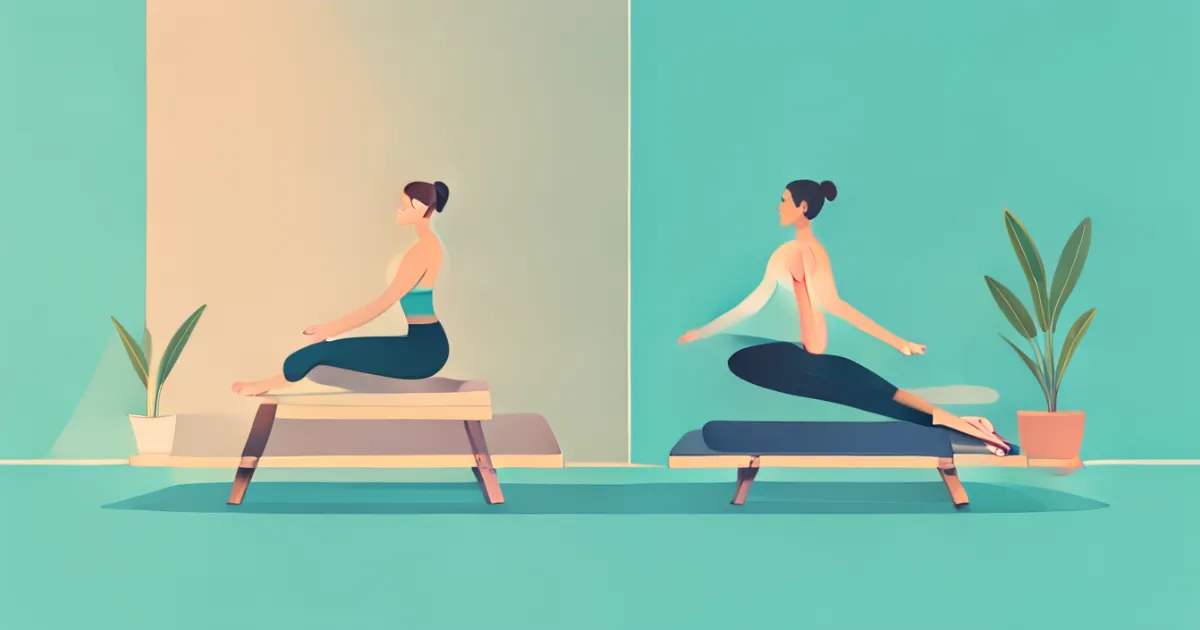
Pilates Reformer vs Mat Pilates Benefits
Compare the benefits of Pilates reformer versus mat Pilates. Understand when to choose each method based on your fitness goals and experience level.

Lena MartinezWednesday, June 18, 2025
Reformer vs Mat Pilates: Understanding the Benefits and Choosing What's Right for You
When exploring Pilates, one of the first decisions you'll face is whether to start with mat classes or dive into reformer work. Both approaches offer incredible benefits for strength, flexibility, and overall body awareness, but they provide different experiences and outcomes. Understanding these differences will help you choose the path that best aligns with your fitness goals, budget, and lifestyle.
The Core Difference: Equipment vs Bodyweight
At its heart, the distinction between reformer and mat Pilates comes down to equipment and resistance. Mat Pilates relies entirely on your body weight for resistance, using gravity and precise movements to create challenge. The reformer, on the other hand, utilizes springs, straps, and a moving carriage to provide both assistance and resistance throughout exercises.
This fundamental difference means that while both practices follow the same Pilates principles—centering, concentration, control, precision, breath, and flow—they engage your body in uniquely different ways.
Mat Pilates: The Foundation of Pure Pilates
What Makes Mat Pilates Special
Mat Pilates represents Joseph Pilates' original method, developed when equipment was scarce. It requires deep core engagement and precise muscle control because you're working against your own body weight without external support.
Benefits of Mat Pilates:
Core Strength Development: Without equipment assistance, your deep core muscles must work harder to stabilize your spine during movements.
Accessibility and Convenience: You can practice mat Pilates anywhere with just a mat, making it perfect for home workouts or travel.
Cost-Effective: Mat classes typically cost less than reformer sessions, and many people start with mat work due to budget considerations.
Body Awareness: Working with just your body weight forces you to develop a deeper understanding of proper alignment and muscle engagement.
Progressive Challenge: As you become stronger, your own body weight provides increasing resistance naturally.
Who Thrives with Mat Pilates
Mat Pilates is ideal for beginners who want to build foundational strength, individuals on a budget, or those who want to supplement other forms of exercise. It's particularly beneficial for people who enjoy mind-body connection and are willing to focus deeply on form and technique.
Potential Limitations
While mat Pilates offers tremendous benefits, some people find it challenging initially, especially if they have limited core strength or flexibility. Certain exercises can be difficult to perform without the assistance that equipment provides.
Reformer Pilates: Enhanced Resistance and Versatility
What Makes the Reformer Unique
The reformer's spring system creates a dynamic resistance environment that can both challenge and support your movements. This versatility makes it possible to perform exercises that might be too difficult on the mat, while also providing assistance for movements that require more flexibility.
Benefits of Reformer Pilates:
Adaptable Resistance: Springs can be adjusted to make exercises easier or harder, accommodating different fitness levels and specific goals.
Full-Body Conditioning: The reformer allows for a wider variety of exercises that target muscles from multiple angles.
Support for Proper Form: The equipment helps guide your movements, making it easier to maintain proper alignment.
Enhanced Flexibility: The springs can assist with stretching movements, helping you achieve greater range of motion.
Joint-Friendly: The controlled resistance is often gentler on joints than high-impact exercises.
Infinite Variety: With spring adjustments, strap configurations, and accessory options, the reformer offers endless exercise variations.
Who Benefits Most from Reformer Work
The reformer is excellent for people recovering from injuries (with proper guidance), those seeking faster strength gains, or anyone who wants variety in their workouts. It's particularly beneficial for older adults, athletes looking to improve performance, and people who need additional support due to limited mobility or strength.
Considerations for Reformer Practice
The main drawbacks of reformer Pilates are the cost and accessibility. Equipment is expensive, and classes typically cost more than mat sessions. Additionally, you're limited to locations that have reformers unless you invest in home equipment.
Comparing Specific Benefits
Strength Development
Mat Pilates: Builds functional strength through bodyweight exercises. Excellent for developing deep core stabilizers and improving overall muscular endurance.
Reformer Pilates: Provides both concentric and eccentric muscle training through spring resistance. Allows for targeted strengthening of specific muscle groups and can produce faster strength gains.
Flexibility and Mobility
Mat Pilates: Improves flexibility through bodyweight stretches and flowing movements. Progress may be slower but tends to be more sustainable.
Reformer Pilates: The springs can assist with deeper stretches, potentially accelerating flexibility improvements. The moving carriage also enhances joint mobility.
Caloric Burn and Weight Management
Mat Pilates: Moderate calorie burn, typically 180-250 calories per hour depending on intensity. Excellent for building lean muscle that supports long-term weight management.
Reformer Pilates: Higher calorie burn, potentially 300-400 calories per hour. The varied resistance can create a more cardiovascular workout.
Mind-Body Connection
Mat Pilates: Requires intense concentration and body awareness without equipment feedback. Many practitioners report deeper mind-body connection due to the focused nature of mat work.
Reformer Pilates: The equipment provides tactile feedback that can help develop body awareness. The variety of exercises keeps the mind engaged and prevents monotony.
Making Your Choice: Factors to Consider
Your Fitness Goals
If your primary goal is building foundational core strength and improving body awareness, start with mat Pilates. If you're looking for faster strength gains, need support due to physical limitations, or want more variety in your workouts, the reformer might be your better choice.
Budget and Accessibility
Consider both your financial budget and time availability. Mat classes are generally more affordable and widely available. Reformer classes cost more but may provide faster results, potentially requiring fewer sessions to achieve your goals.
Physical Condition and Experience
If you're recovering from injury or have significant strength or flexibility limitations, the reformer's support system might be more appropriate. If you're generally fit and enjoy challenge, mat Pilates could provide the foundation you need.
The Best of Both Worlds
Many experienced Pilates practitioners recommend combining both approaches. Starting with mat work builds fundamental strength and body awareness, while adding reformer sessions provides variety and enhanced conditioning.
Sample Weekly Schedule
- Beginner: 2-3 mat classes per week to build foundational strength
- Intermediate: 1-2 mat classes plus 1-2 reformer sessions weekly
- Advanced: 2-3 reformer sessions with occasional mat work for maintenance
Transitioning Between Methods
If you start with one method and want to try the other, here's what to expect:
From Mat to Reformer: You'll likely find reformer work initially easier due to the spring assistance. However, you'll need to adapt to the equipment and learn proper spring settings for each exercise.
From Reformer to Mat: The transition can be challenging as you'll lose the spring assistance. Focus on core engagement and consider taking private lessons to adapt your technique.
Final Thoughts
Neither approach is inherently better—they simply offer different pathways to the same destination of improved strength, flexibility, and body awareness. The best choice depends on your individual circumstances, goals, and preferences.
Consider starting with mat Pilates if you're on a budget, want to practice at home, or prefer building a strong foundation before adding equipment complexity. Choose the reformer if you need extra support, want faster results, or enjoy variety in your workouts.
Remember that both forms of Pilates require qualified instruction for optimal results and safety. Whether you choose mat, reformer, or both, working with an experienced instructor will ensure you're performing exercises correctly and progressing appropriately for your fitness level.
The beauty of Pilates lies in its adaptability—there's room in the practice for everyone, regardless of age, fitness level, or physical limitations. The key is starting where you are, staying consistent, and enjoying the journey of discovering what your body can achieve.