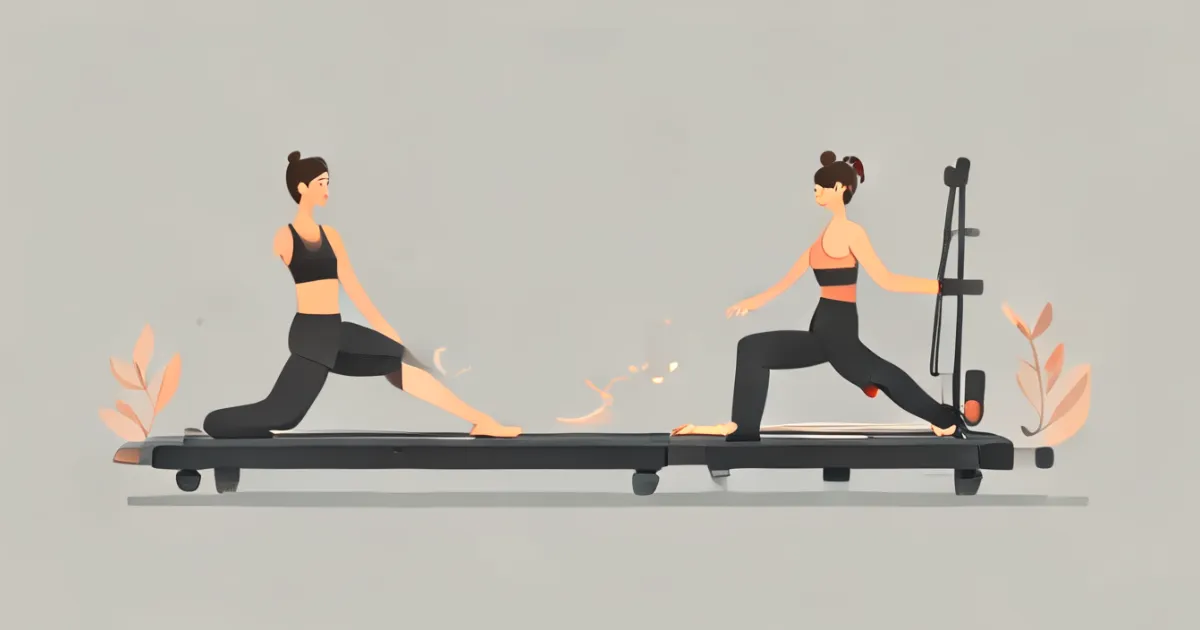
Pilates Reformer vs Cadillac: Which Machine Is Right for You?
Choosing between a Pilates reformer and Cadillac can be confusing. Our detailed comparison covers exercise variety, space requirements, cost, and which equipment best suits your fitness goals.

Lena MartinezFriday, August 15, 2025
When you're ready to invest in Pilates equipment, the reformer versus Cadillac decision often becomes the biggest crossroads in your purchasing journey. Both machines offer incredible benefits, but they serve different purposes, require different space commitments, and appeal to different movement preferences. Understanding these distinctions will help you choose equipment that matches your fitness goals, available space, and long-term workout style.
Understanding the Fundamental Differences
At first glance, the reformer and Cadillac might seem like cousins in the Pilates family tree, but they're designed with distinctly different movement philosophies. The Pilates reformer focuses on linear, controlled movements along a fixed track, using spring resistance to create both assistance and challenge. Think of it as a sophisticated resistance training system that guides your body through precise movement patterns.
The Cadillac, often called the trapeze table, takes a different approach entirely. It's essentially a raised platform with a canopy frame overhead, equipped with various bars, straps, and springs that create a three-dimensional movement space. While the reformer guides your movements along a track, the Cadillac allows for more freedom of movement in multiple directions, making it particularly versatile for stretching, supported strength work, and therapeutic applications.
This fundamental difference in design philosophy means each machine excels at different types of exercises and movement patterns. The reformer shines in creating fluid, flowing sequences that build strength through controlled resistance. The Cadillac offers more options for static stretching, assisted movements, and decompression exercises that can be difficult to achieve on the reformer alone.
Space Requirements and Practical Considerations
Before diving into exercise benefits, let's address the practical reality of home equipment. Standard reformers typically require a footprint of approximately 8-10 feet by 2-3 feet, while Cadillacs need roughly 8 feet by 3-4 feet, plus additional overhead clearance for the canopy frame. However, many modern reformers come with space-saving designs—some fold up against walls, others feature stacking capabilities, and compact models can work in smaller rooms.
Cadillacs, by contrast, are permanent installations. The canopy frame cannot be collapsed or folded away, which means they demand dedicated space that can't be repurposed when you're not working out. For those living in apartments or multi-use spaces, this fixed nature can make Cadillads impractical unless you have a dedicated fitness room.
The ceiling height requirement also deserves serious consideration. Most Cadillac installations need at least 8-9 feet of clearance overhead to accommodate hanging movements and ensure safe range of motion. If you're working with lower ceilings or limited vertical space, the reformer becomes the more logical choice by default.
Exercise Variety and Workout Styles
The exercise variety offered by each machine might surprise you. While reformers are often perceived as more limited due to their linear movement pattern, they actually support hundreds of exercises through clever use of different spring configurations, body positions, and accessory attachments. From full-body strength sequences to targeted muscle isolation, the reformer provides comprehensive workout capabilities that can keep you challenged for years.
Cadillacs offer their own extensive exercise repertoire, particularly excelling in areas where reformers have limitations. The overhead canopy allows for hanging exercises that provide spinal decompression—valuable for those with back issues or those seeking inversion-style benefits without the complexity of full inversion tables. The various push-through bars, roll-back bars, and leg springs create options for assisted stretching and supported strength work that are simply impossible on a reformer.
What many people don't realize is that these machines aren't necessarily mutually exclusive. Many serious Pilates enthusiasts eventually acquire both, using them complementarily. The reformer typically becomes the workhorse for daily workouts, while the Cadillac serves as a specialized tool for specific therapeutic needs, advanced stretching routines, or when you want to vary your movement patterns.
Cost Comparison and Value Proposition
The investment difference between these machines can be substantial. Entry-level reformers start around a few hundred dollars for basic models, while professional-grade equipment can run several thousand. Cadillacs typically command premium prices starting where high-end reformers top out, with professional studio units often exceeding the cost of reformers by significant margins.
However, cost shouldn't be evaluated in isolation—the value proposition depends entirely on how you'll use the equipment. If you're planning daily workouts focused on strength, flexibility, and cardiovascular conditioning, a quality reformer likely provides better value through more frequent use. If you have specific therapeutic needs, enjoy assisted stretching, or want the versatility of both resistance and support systems, the Cadillac's higher upfront cost might be justified.
Consider also the long-term cost of accessories. Reformers often require various boxes, jump boards, and other attachments as you advance in your practice. Cadillacs, while more expensive initially, typically come with more comprehensive attachment systems included, reducing additional purchases over time.
Skill Development and Learning Curve
The learning curves for these machines differ significantly. Most people find reformers more intuitive for beginners—the guided carriage movement provides clear feedback about proper form, making it easier to learn foundational Pilates principles. The linear nature of reformer exercises creates a natural progression from basic movements to more complex sequences.
Cadillacs present a steeper initial learning curve. The freedom of movement, while ultimately a benefit, can be overwhelming for newcomers who haven't yet developed the body awareness and control that Pilates requires. Without the guidance of a moving carriage, it's easier to perform exercises with improper form, potentially reducing effectiveness or increasing injury risk.
For those working primarily without professional instruction, the reformer generally offers a more self-guided experience. Many reformer programs include detailed video instructions, progression paths, and built-in form feedback systems that make home practice more accessible and safer.
Making the Right Choice for Your Goals
Your decision ultimately comes down to personal priorities and movement preferences. Choose the reformer if you value: daily workout efficiency, space versatility, progressive strength building, and a more intuitive learning experience. The reformer's guided movement patterns make it ideal for those who want clear structure and measurable progression in their fitness journey.
Opt for the Cadillac if you prioritize: maximum exercise variety, therapeutic applications, assisted stretching capabilities, and have dedicated space. The Cadillac's versatility makes it perfect for those with specific rehabilitation needs, advanced practitioners seeking movement challenges, or instructors who need equipment that can accommodate various client needs and abilities.
Remember that many Pilates enthusiasts start with one machine and add the other later as their practice deepens and space permits. Some manufacturers even offer combination units that provide reformer functionality with convertible Cadillac features, though these hybrid systems typically involve significant compromises in both performance and quality.
Whatever your choice, both machines represent significant investments in your health and wellbeing. The key is selecting equipment that you'll use consistently and that supports your movement preferences, rather than choosing based on perceived status or external recommendations. Your perfect Pilates machine is the one that fits your life, space, and movement goals.