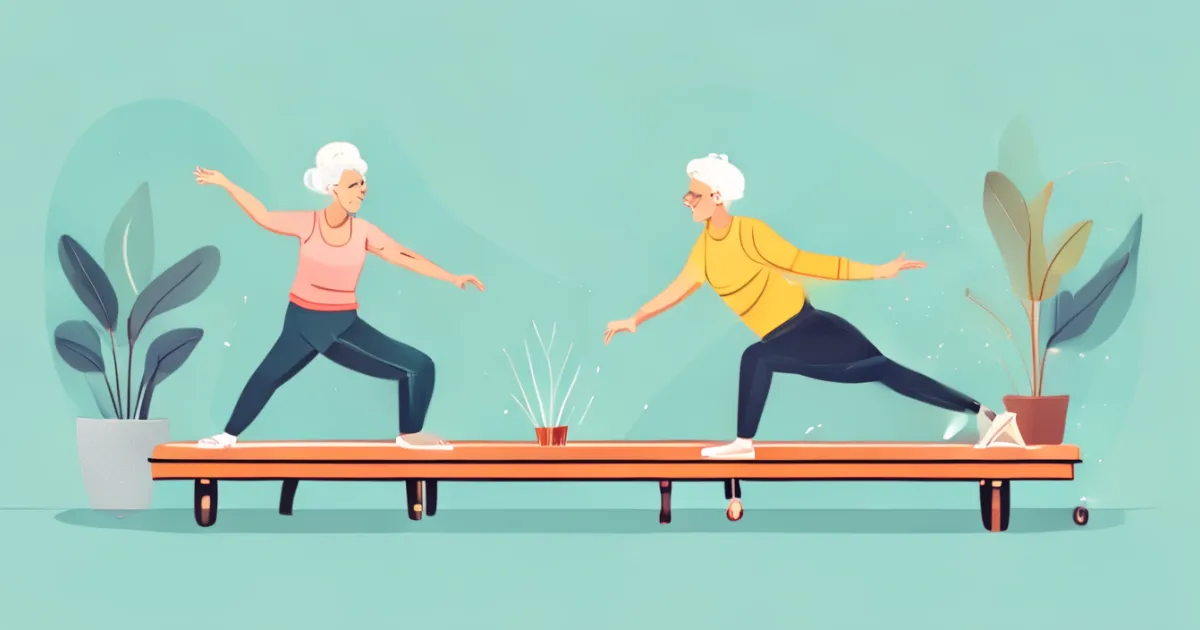
Pilates Machine Exercises for Seniors: Safe & Effective Workouts
Stay strong and mobile at any age with senior-friendly Pilates machine exercises. Our guide includes modified movements, safety tips, and routines specifically designed for older adults.

Amira HassanFriday, August 15, 2025
As we age, maintaining strength, flexibility, and balance becomes increasingly crucial for independent living and overall wellbeing. Pilates machines offer a uniquely safe and effective way for older adults to stay active, providing support and resistance that adapts to varying fitness levels and physical limitations. The key is understanding how to modify exercises to match your body's current capabilities while gradually building strength and confidence.
The Senior-Friendly Advantage of Pilates Machines
Unlike traditional exercise equipment that can be intimidating or risky for older adults, Pilates machines—particularly reformers—provide guided movement patterns that support proper form while reducing injury risk. The carriage glides smoothly along tracks, springs provide consistent resistance, and straps offer support for challenging positions that might be difficult to access on your own.
For seniors dealing with arthritis, osteoporosis, or joint replacements, Pilates machines offer low-impact resistance training that builds strength without stressing vulnerable joints. The adjustable spring system allows for precise resistance modifications, making it possible to work around pain points while still challenging surrounding muscle groups.
Research shows that regular Pilates practice can significantly improve balance, reduce fall risk, and enhance functional independence in older adults. These benefits stem from Pilates' focus on core strength, proprioception (body awareness), and controlled movement patterns—all crucial elements for maintaining mobility and preventing injuries.
Essential Beginner Exercises for Seniors
Starting with Pilates machines should focus on fundamental movements that establish proper form and body awareness. The footwork series provides an excellent foundation, allowing you to lie comfortably on the carriage while performing leg presses against light spring resistance. This exercise strengthens quadriceps, hamstrings, and gluteal muscles—essential for walking, stair climbing, and rising from chairs.
The hundred, modified with knees bent and head down, introduces breathing coordination while gently engaging abdominal muscles. Rather than attempting the full advanced version with legs extended and head lifted, seniors can keep feet on the floor or on the footbar, focusing instead on deep lateral breathing and subtle core activation.
The leg series, performed while lying on your side with support from the shoulder rest and straps, targets hip abductors and external rotators—muscles crucial for lateral stability and fall prevention. Start with minimal resistance, focusing on control rather than range of motion, and gradually increase as strength improves.
Safety Modifications and Progressions
When working with Pilates machines as a senior, safety should always precede intensity. Begin with the lightest spring settings and focus on mastering movement patterns before adding resistance. Consider working with a certified instructor who has experience with older adults to ensure proper setup and exercise selection.
For those with limited mobility, certain modifications can make exercises more accessible. The tower unit on a reformer provides additional support for exercises like the roll-down or standing arm work. The push-through bar offers assistance for movements that might be challenging when performed against gravity alone.
Always prioritize pain-free movement over achieving perfect form. Some discomfort as muscles adapt is normal, but sharp pain indicates you should modify the exercise or reduce resistance. Remember that Pilates should feel challenging but not painful—the goal is to work within your current limits while gradually expanding them.
Building Functional Strength for Daily Living
The true value of Pilates machine exercises for seniors lies in their transferability to everyday activities. Exercises that strengthen spinal extensors improve posture and reduce the forward head position that often accompanies aging. Core work supports better balance and stability when walking or reaching overhead.
The arm series using light spring resistance helps maintain upper body strength needed for carrying groceries, lifting grandchildren, or performing household tasks. By working with controlled resistance rather than heavy weights, seniors can build functional strength without risking joint damage or muscle strains.
Perhaps most importantly, Pilates machines address the muscle imbalances that develop over years of repetitive daily movements. By strengthening weaker muscle groups and stretching tight ones, you can improve movement efficiency and reduce compensation patterns that lead to pain and dysfunction.
Creating a Sustainable Practice Routine
Consistency matters more than intensity when it comes to Pilates for seniors. Aim for two to three sessions weekly, allowing adequate recovery time between workouts. Even shorter, more frequent sessions can be more beneficial than occasional, longer workouts that might leave you sore and discouraged.
Many seniors find it helpful to establish a pre-workout preparation routine that includes gentle mobility exercises and mental focus. Taking time to center yourself, practice breathing patterns, and mentally review your planned exercises can improve both the quality and safety of your workout.
Consider keeping a simple journal to track your progress, noting which exercises feel easier over time, any movements that cause discomfort, and adjustments that improved your comfort. This documentation helps you and any instructors you work with to refine your program and celebrate incremental improvements.
Working Around Common Age-Related Conditions
Pilates machines can be adapted for most common age-related conditions with proper guidance. For those with osteoporosis, focus on spinal extension exercises while avoiding excessive forward flexion. The reformer's support system makes it possible to safely strengthen back muscles that are crucial for vertebral health.
Seniors with vestibular issues or balance concerns can benefit from the stable platform that Pilates machines provide, allowing for strength and stability work without fall risk. Exercises can be performed while lying, sitting, or standing with support, making them accessible regardless of current balance abilities.
For those managing chronic conditions like diabetes or heart disease, the gentle cardiovascular component of flowing Pilates sequences can improve circulation and metabolic function. Always consult with your healthcare provider before beginning any new exercise program, and work with instructors who understand how to modify exercises for your specific health considerations.
Remember that age is just one factor in determining appropriate exercise intensity—your current fitness level, health status, and movement history are equally important. The beauty of Pilates machines lies in their adaptability, allowing you to work at exactly the right level for your body today while building toward tomorrow's goals.