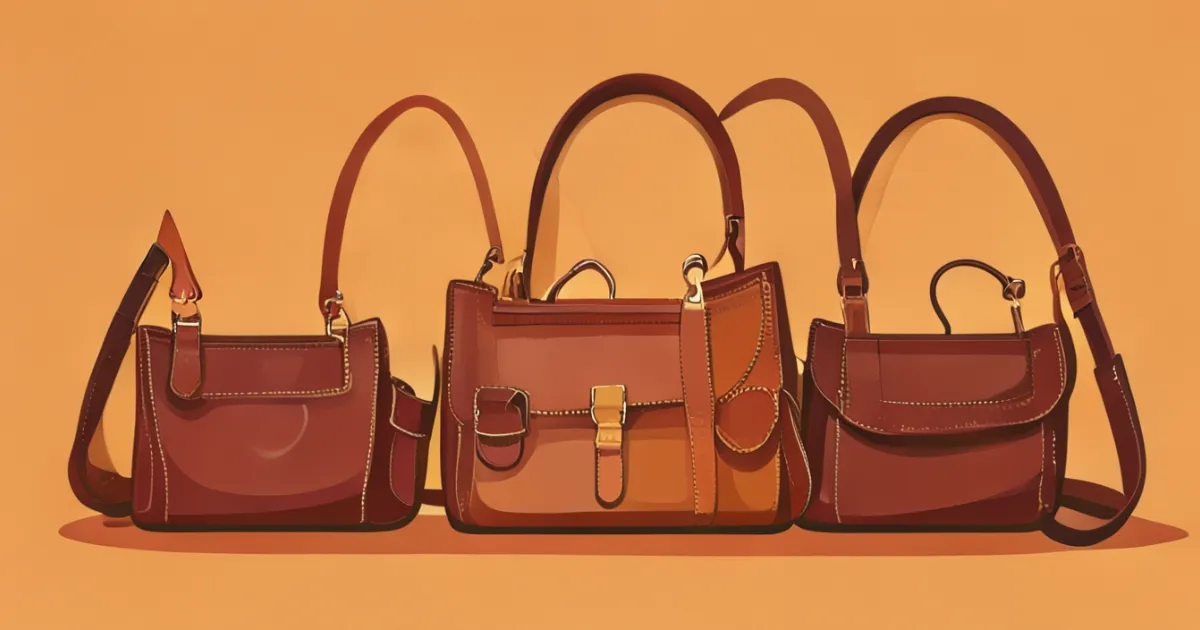
Leather Crossbody Bag: Timeless Quality & Style
Explore premium leather crossbody bags that combine durability with sophisticated style. Learn about different leather types, care tips, and investment-worthy designs.

Marco RossiTuesday, June 17, 2025
The Economics of Quality: Why Leather Crossbody Bags Remain Smart Investments
When you're shopping for accessories that combine style with practical value, few decisions make more economic sense than investing in a quality leather crossbody bag. Let me break down why this particular category has maintained its market dominance for decades, and what makes a leather crossbody bag such a sound decision for the modern consumer.
Understanding the Unit Economics of Durability
First, let's talk about the math behind leather's longevity. While synthetic materials might offer lower upfront costs, they typically require replacement every 12-18 months with regular use. Premium leather crossbody bags, by contrast, often deliver 5-7 years of reliable service. The replacement cycle alone creates a compelling value proposition that luxury brands have understood for generations.
Consider the cost-per-wear calculation: if you invest in a well-made leather crossbody bag for a reasonable price and wear it three times weekly for five years, your daily cost becomes remarkably low compared to fast-fashion alternatives that need frequent replacement. This is the kind of unit economics that drives sustainable consumer behavior.
Material Quality: The Foundation of Value
Not all leather crossbody bags are created equal, and understanding the material hierarchy helps explain price variations. Full-grain leather represents the top tier—it's the strongest, most durable portion of the hide, developing that sought-after patina that tells your personal story over time. Top-grain leather offers slightly less character but provides excellent durability at a more accessible price point.
Genuine leather often surprises consumers—it's real leather, but it's the lowest quality tier, typically made from remaining hide layers bonded together. While it carries the "leather" label, genuine leather doesn't deliver the longevity or character development that makes premium crossbody bags investment-worthy pieces.
The Incentives Behind Craftsmanship
What separates mass-produced leather goods from truly exceptional crossbody bags comes down to manufacturing incentives. Factory-focused production prioritizes volume over quality, cutting corners on stitching, hardware, and finishing processes. Artisan-driven leather crossbody bags operate on different incentives—they build reputation through word-of-mouth and repeat business.
This explains why hand-stitched leather crossbody bags, while more expensive initially, often become family heirlooms. The craftsmanship incentive structure rewards attention to detail rather than cost-cutting measures. When you understand these market dynamics, the premium pricing becomes transparent rather than arbitrary.
Market Signals: What Price Tells You
Price functions as a market signal in the leather crossbody bag category, but not in the way many consumers assume. Rather than indicating brand prestige alone, price typically correlates with material quality, hardware durability, and production methods. Brass hardware costs more than cheap plating but won't tarnish or fail. Vegetable-tanned leather costs more than chemically processed alternatives but offers better environmental impact and aging characteristics.
The market has effectively segmented leather crossbody bags into three tiers: entry-level fashion pieces (1-2 year lifespan), mid-quality daily bags (3-5 years), and investment pieces (5+ years). Understanding this segmentation helps match your purchase patterns with your actual usage needs and budget constraints.
Risk Assessment: When Premium Doesn't Pay Off
Not every situation justifies premium leather crossbody bag investment. If you're prone to losing accessories, work in environments where bags face rough treatment, or prefer seasonal style changes, the replacement cost risk outweighs durability benefits. In these cases, mid-tier leather or high-quality synthetic crossbody bags might better align with your personal economics.
The key is honest assessment of your usage patterns. Daily commuters who value consistent quality benefit most from leather's durability advantage. Occasional users might find the premium investment difficult to justify mathematically.
Maintenance Economics: Protecting Your Investment
Here's where many leather crossbody bag owners miss opportunity cost: proper maintenance dramatically extends service life. Regular conditioning costs minimal but prevents the cracking and drying that lead to premature replacement. Storage in breathable bags rather than plastic prevents moisture damage that creates expensive repair needs.
The maintenance economics work like this: a five-minute monthly conditioning routine can add years to your leather crossbody bag's useful life, dramatically improving your return on investment. This is why quality leather brands emphasize care instructions—it protects both their reputation and your investment.
Bottom Line
The leather crossbody bag remains a smart economic decision when you understand the unit economics of durability, quality differentiation, and maintenance value. Focus on material quality appropriate for your usage patterns, understand that price reflects real production differences rather than marketing hype, and maintain your investment properly.
For most consumers, a mid-tier leather crossbody bag from a reputable manufacturer offers the optimal balance of cost, durability, and style versatility. Skip the ultra-premium luxury pieces unless you're specifically collecting, but avoid entry-level options that won't deliver the quality experience that makes leather crossbody bags timeless accessories.
The math works in your favor when you approach leather crossbody bags as practical investments rather than fashion expenses. Focus on quality construction, appropriate materials for your lifestyle, and consistent care. That's how you turn a simple accessory into a long-term value proposition.