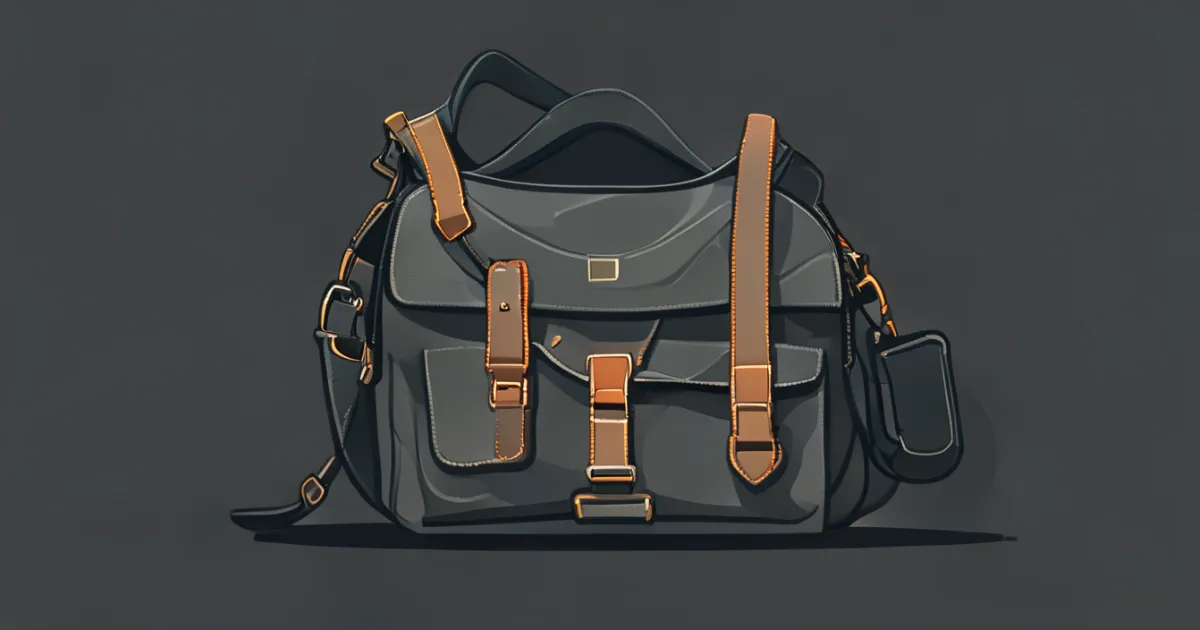
Crossbody Bag for Men: Practical & Stylish Solutions
Explore masculine crossbody bags designed for modern men. From rugged materials to sleek urban designs, find the perfect balance of function and style.

Marco RossiTuesday, June 17, 2025
Market Evolution: How Men's Crossbody Bags Transformed from Niche to Mainstream
The explosive growth of men's crossbody bags represents one of the most interesting accessory market shifts of the past decade. What was once considered niche functionality has evolved into a mainstream category driven by changing consumer behavior, technological needs, and shifting cultural norms. Let's examine the economic forces behind this transformation.
Historical Context: Function to Fashion Transition
Men's crossbody bags initially gained traction through pure functional necessity. Early adopters were travelers, photographers, and outdoor enthusiasts who needed hands-free access to equipment. The first wave of crossbody bags for men prioritized utility over aesthetics—think tactical-inspired designs with more pockets than style consideration.
The market inflection point occurred when tech companies started designing smaller, more portable devices. As phones replaced cameras, tablets replaced laptops, and digital wallets emerged, men needed different carrying solutions. This technological shift created demand for crossbody bags that protected expensive electronics while maintaining professional appearance. The market responded by bridging the gap between pure utility and workplace-appropriate design.
Market Segmentation: Understanding Consumer Categories
The men's crossbody bag market now operates in three distinct segments, each serving different consumer incentives. The professional segment focuses on premium materials and subtle designs that complement business attire. These consumers value discretion and quality over brand visibility.
The urban segment prioritizes security features and weather resistance. City dwellers face different threats—crowded public transportation, unpredictable weather, and frequent transitions between environments. Their crossbody bags emphasize anti-theft features and all-weather capability.
The lifestyle segment encompasses everyone from students to retirees who value convenience above all else. This market volume drives mass production, creating accessible options that democratized crossbody bag ownership across demographics.
Design Evolution: From Masculine Codes to Universal Appeal
Early men's crossbody bags followed traditional masculine design codes—dark colors, rugged materials, military-inspired hardware. While this approach worked for initial adoption, it limited market expansion. Successful brands discovered that men respond to quality and functionality regardless of traditional gender signaling.
The most successful men's crossbody bags abandoned explicit masculine coding in favor of universal design principles. This explains why minimalist leather crossbody bags and technical fabric versions both succeed in the market—they serve different needs without relying on gender stereotypes. The design evolution reflects broader cultural shifts toward utility-first thinking.
Technology Integration: The Device Protection Imperative
Smartphone evolution fundamentally changed men's crossbody bag economics. As phones became larger, more expensive, and more central to daily life, protection became non-negotiable. A dropped phone represents significant replacement cost, making protective crossbody bags economically rational.
This integration created new market requirements: dedicated padded compartments, wireless charging compatibility, quick-access phone pockets, and weather protection. Crossbody bags that properly protected devices commanded price premiums, creating clear differentiation points in the market. Technology necessity overrode any stigma about carrying bags.
Cultural Acceptance: The Visibility Equation
Men's crossbody bag adoption required cultural permission. The tipping point came when high-profile professionals, athletes, and celebrities normalized crossbody bag usage. When influential figures wore crossbody bags without negative social consequences, adoption barriers fell dramatically.
The cultural shift followed predictable diffusion patterns: early adopters (tech workers, travelers), early majority (urban professionals), late majority (suburban families), laggards (traditionalists). Each group required different value propositions, explaining why successful crossbody bag brands offer diverse product lines rather than one-size-fits-all solutions.
Supply Chain Economics: From Specialty to Scale
Men's crossbody bag market growth created fascinating supply chain transformations. Initial production relied on specialty manufacturers with limited capacity and high costs. As demand accelerated, mainstream accessory manufacturers redirected production lines, creating economies of scale that dramatically lowered prices.
The supply chain evolution democratized men's crossbody bag ownership. Premium options remained available at higher price points, but accessible options entered the market at price points that removed adoption barriers. This expansion mirrors other accessory categories that transitioned from luxury goods to mainstream essentials.
Competition Dynamics: Feature vs. Simplicity
The men's crossbody bag market now faces interesting competitive dynamics. Some manufacturers compete on feature density—adding more pockets, smart integration, specialized compartments. Others compete on simplicity—minimalist designs that do one thing perfectly: carry essentials unobtrusively.
This creates a fascinating market bifurcation. Feature-heavy crossbody bags appeal to tech enthusiasts and gadget lovers who value optimization. Minimalist versions attract consumers who prefer simplicity and timeless design. Both approaches succeed by serving different consumer psychologies rather than attempting to satisfy everyone with compromise solutions.
Future Market Dynamics: What's Next?
Looking ahead, several factors suggest continued men's crossbody bag market growth. Increasing device dependence creates ongoing protection needs. Urbanization concentrates population density where crossbody bags excel. Remote work blurs professional/casual boundaries, increasing versatility requirements.
However, market maturity brings new challenges. Differentiation becomes harder as designs converge. Price competition intensifies as supply chain optimization reaches limits. Consumer expectations continue rising as more options enter the market.
Economic Decision Framework
For consumers evaluating men's crossbody bags, consider your usage patterns against these market dynamics. Daily commuters benefit from professional designs with device protection. Urban dwellers need security features and weather resistance. Occasional users might prioritize affordable options over premium durability.
The most economically rational choice matches your actual usage patterns rather than aspirational scenarios. If you primarily need phone and wallet protection during daily activities, simple crossbody bags might outperform complex, feature-heavy options that add cost without practical benefit.
Bottom Line
Men's crossbody bags represent a market evolution driven by technology needs, cultural shifts, and changing work patterns. The category transitioned from niche utility to mainstream accessory through quality improvements, design sophistication, and cultural acceptance.
For consumers, the key is understanding your specific needs within this market segmentation. Premium leather crossbody bags serve professional contexts differently than technical fabric versions for urban environments. The optimal choice depends on your daily patterns, device requirements, and aesthetic preferences.
The market will likely continue fragmenting into specialized segments rather than converging on universal solutions. This specialization benefits consumers through better-targeted products that serve specific needs rather than attempting to satisfy everyone with compromise designs. The men's crossbody bag has evolved from functional necessity to wardrobe staple through market forces that prioritized utility over tradition.