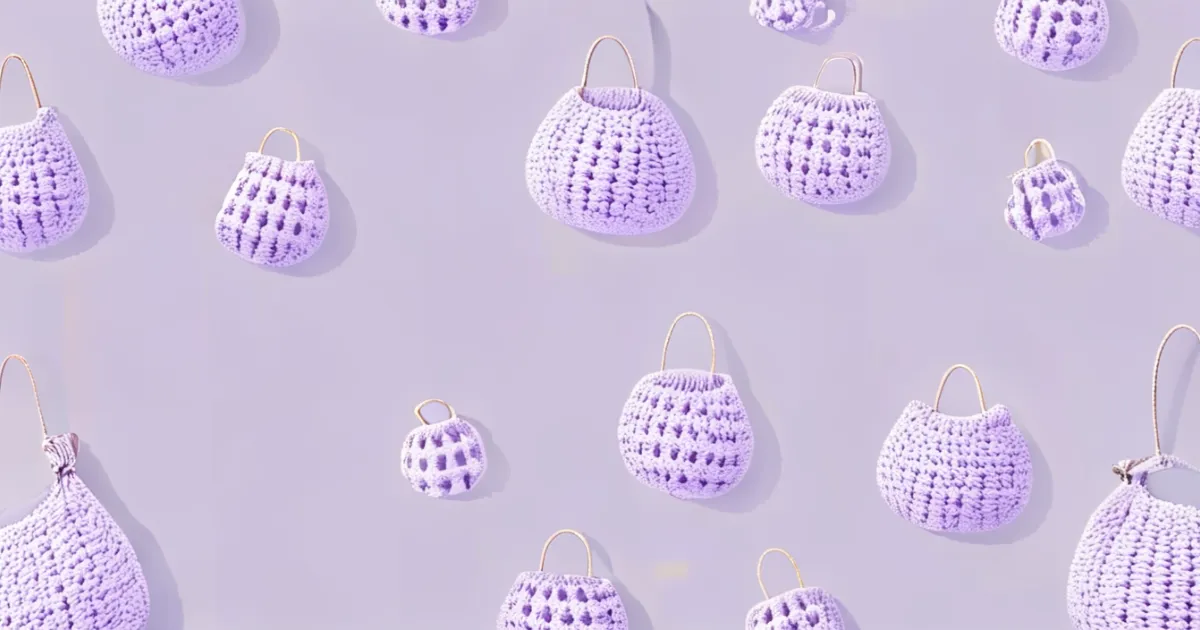
Easy Crochet Bag Patterns for Beginners
Start crocheting bags with these simple beginner-friendly patterns. Features basic stitches, clear instructions, and quick projects perfect for first-time bag makers.

Lena MartinezWednesday, June 18, 2025
Your First Easy Crochet Bag: A Gentle Introduction to Bag Making
You've seen beautiful crochet bags online and thought, "I could never make something like that." But here's a gentle truth: you absolutely can. Starting with an easy crochet bag is the perfect way to build your confidence while creating something useful and lovely. Let's walk through this journey together, one simple stitch at a time.
Why Start with Bag Making?
Crochet bags are ideal beginner projects for several wonderful reasons. They use basic stitches that you might already know, they don't require complicated shaping techniques, and they're forgiving projects where small imperfections often add character rather than detract from the final piece. Plus, you'll end up with something practical—your very first handmade accessory that you can use every day.
Unlike clothing projects that require precise measurements and complex construction, bags are wonderfully straightforward. Think of them as flat or slightly shaped rectangles that you fold and stitch together. This simplicity makes them perfect for developing your crochet skills without the pressure of getting everything exactly right.
Gathering Your Simple Supplies
Before we dive into stitches, let's talk about what you'll need. Don't worry—you won't need a mountain of expensive materials. For your first easy crochet bag, you'll want a smooth, medium-weight yarn in a light color so you can see your stitches clearly. Cotton or acrylic blends work beautifully for beginners because they're forgiving and create sturdy fabric.
Choose a crochet hook that matches your yarn weight—usually between 5.0mm and 6.5mm for worsted weight yarn. Don't have a hook size guide? No worries. The yarn label usually recommends a hook size, or you can simply start with what feels comfortable in your hands. You'll also need a pair of scissors and a yarn needle for finishing touches.
Basic Stitches You'll Need
The beautiful thing about easy crochet bags is that they often use just a few fundamental stitches. If you know how to make a chain stitch, single crochet, and double crochet, you're already equipped to create a beautiful bag. These stitches work together to create solid, durable fabric that's perfect for carrying your essentials.
Chain stitches form the foundation of your project. Single crochet creates tight, sturdy fabric that's great for bag bases and sides. Double crochet works up faster and creates a slightly more open fabric, perfect for the main body of your bag. Don't worry about achieving perfect tension—your first bag is about learning and enjoying the process.
Starting with a Simple Rectangle Pattern
Here's a wonderful secret: many beautiful bags begin with simple rectangles. You'll crochet a flat piece that's essentially twice the height of your finished bag, fold it in half, and stitch up the sides. This approach is incredibly beginner-friendly because you don't have to worry about complex shaping or decreasing stitches until you're ready.
Start with a foundation chain that's about 12-14 inches long for a small bag, or 16-18 inches for a medium tote. Then work in rows until your piece is about twice as tall as you want your finished bag. When you fold it in half, you'll have a perfect bag shape ready for seaming. It's that simple—really.
Adding Handles Without Complications
Handles might sound intimidating, but they're surprisingly straightforward. The easiest method is to create them as part of your main bag body. When your piece is about two-thirds complete, you'll simply stop working in the middle of a row, chain enough stitches for your handle length, skip that many stitches, and continue working on the other side.
Another beginner-friendly approach is making separate handle strips and attaching them later. This gives you more control over handle length and thickness. Either way, you'll be creating sturdy handles that are perfectly sized for your comfort and carrying style.
Simple Techniques for Professional Finishes
Even beginners can achieve professional-looking finishes with a few simple techniques. Weaving in your ends securely prevents unraveling, while proper seaming creates strong, durable construction. Don't rush these finishing steps—they're what transform your project from homemade to handcrafted.
When seaming your bag sides, use a yarn needle and matching yarn to create invisible, sturdy joins. Work through both layers of fabric consistently, keeping your tension even but not too tight. Remember that bag seams need to withstand regular use, so take your time and make them strong.
Color Choices That Build Confidence
For your first easy crochet bag, consider using a single color throughout. This lets you focus on your stitches without worrying about color changes or managing multiple yarn skeins. A medium shade shows stitch definition well while hiding any minor tension variations you might experience as you learn.
As you gain confidence, you can experiment with simple color changes or stripes. But there's nothing wrong with sticking with one color—many beautiful bags use a single shade to create elegant, timeless designs that showcase the texture of your crochet work.
Common Beginner Hurdles (And How to Overcome Them)
You might notice your tension varies as you work, creating rows that are slightly different widths. This is completely normal for beginners. Instead of seeing it as a mistake, consider it part of your handmade bag's unique character. Most tension variations even out with practice, and many become less noticeable after blocking or washing your finished bag.
Another common concern is when your bag doesn't hold its shape as expected. Remember that crochet fabric naturally has more stretch than woven materials. For better structure, consider using a slightly smaller hook than recommended, or work with a firmer cotton yarn that creates sturdier fabric.
Celebrating Your First Bag Completion
When you finish your first easy crochet bag, take time to appreciate what you've accomplished. You've created something functional and beautiful using your hands and creativity. That feeling of pride when you use your handmade bag for the first time is absolutely wonderful—and well-deserved.
Your first bag might not be perfect, but it will be uniquely yours. Every stitch represents your learning journey, every slight variation tells part of your story. As you carry your bag, remember that you started with nothing more than yarn and a hook, and through patience and practice, you created something both useful and beautiful.
What Comes Next
Once you've completed your first easy crochet bag, you'll be amazed at how much you've learned. The skills you've gained—working in rows, seaming, creating handles—form the foundation for countless future projects. You might want to try a slightly different shape, experiment with new stitch patterns, or create a matching accessory.
Remember that every experienced crocheter was once a beginner. Your first bag opens the door to a creative world where you can continue building skills, exploring new techniques, and creating increasingly complex projects. For now, though, take pride in your accomplishment and enjoy using your very first handmade crochet bag.