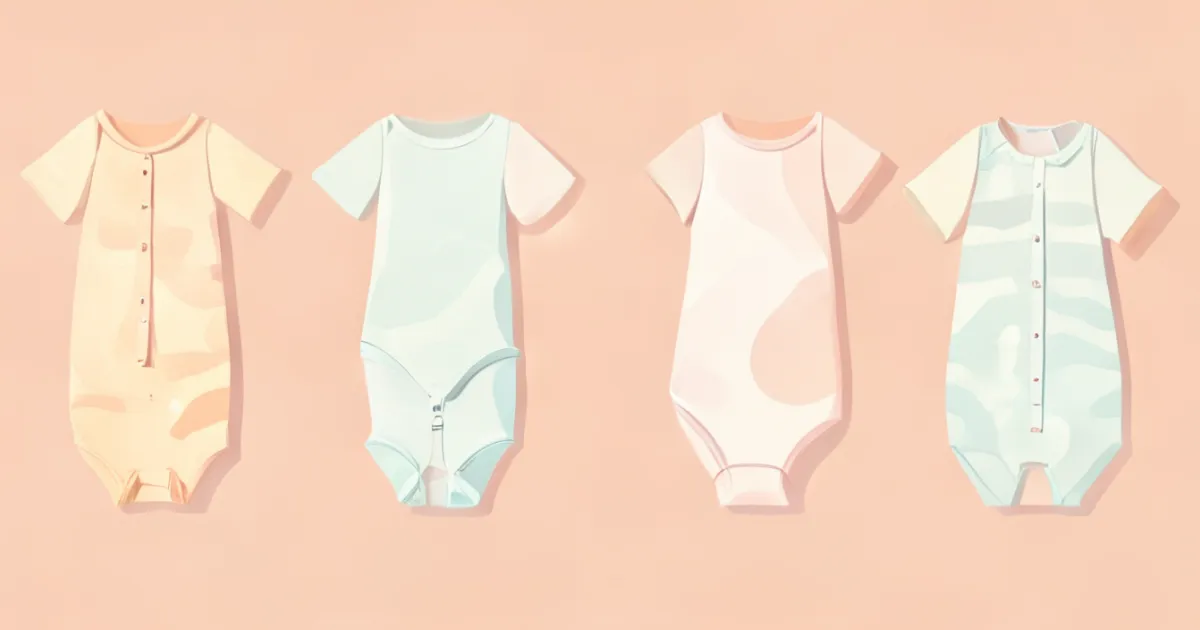
Essential Guide to Bamboo Baby Onesies: Style Meets Function
Find the perfect bamboo baby onesies for everyday wear and special occasions. Explore different styles, sizing guides, and design features that make bamboo onesies a wardrobe staple for modern parents.

Marco RossiMonday, June 23, 2025
When you're building a baby wardrobe, onesies become the foundation of daily dressing. But bamboo baby onesies offer something more than basic functionality—they represent a smart investment in comfort, practicality, and long-term value. Let's break down why these simple garments deserve careful consideration and how to choose ones that actually deliver on their promises.
The Economics of Baby Clothing
Before diving into bamboo-specific benefits, it's worth understanding the unit economics of baby clothes. A typical newborn needs 8-10 onesies per day during those early weeks. That's not just a laundry consideration—it's a real cost calculation. Most parents discover that cheap cotton onesies wear out after 20-30 wash cycles, while quality bamboo garments can last through multiple children.
The initial price premium for bamboo (typically 30-50% more than conventional cotton) makes sense when you factor in durability. bamboo fabric maintains its softness and shape longer, reducing replacement frequency. For parents planning multiple children or those who value clothing that maintains quality through hand-me-downs, this longevity advantage becomes economically significant.
What Makes Bamboo Onesies Different
The fabric technology behind bamboo creates distinct advantages that go beyond marketing claims. Bamboo fibers have a round, smooth structure that creates less friction against delicate skin. This isn't just a comfort feature—it's a practical benefit that reduces irritation and potential skin issues.
Temperature regulation represents another key differentiator. Bamboo fabric naturally wicks moisture away from the body while remaining breathable. This means fewer temperature-related outfit changes throughout the day, which translates to real time savings for busy parents. The fabric's ability to adapt to different temperatures also extends the useful season range for each garment.
Moisture management deserves special attention. Unlike cotton, which absorbs moisture and stays damp, bamboo wicks moisture away while feeling dry to the touch. This property helps prevent skin irritation and reduces the frequency of clothing changes during spills or accidents.
Style Meets Function: Design Features That Matter
When evaluating bamboo baby onesies, certain design elements consistently deliver better value through daily use. Look for reinforced shoulders that facilitate easier over-the-head dressing—a small feature that becomes significant during 2 AM changes. This design choice accommodates different dressing styles and reduces the struggle factor that contributes to parent stress.
Envelope necklines versus traditional snap necks offer another practical consideration. The envelope design allows for downward expansion during removal, which means less manipulating of your baby's head and neck. While snap necks provide adjustability, envelope designs typically prove more user-friendly during the newborn stage.
Consider the snap configuration along the bottom seam. Quality bamboo onesies use reinforced snap plackets with durable metal or high-grade plastic snaps. The number of snaps (typically three) affects fit flexibility, but more importantly, the reinforcement around the snap holes prevents tearing during repeated use and washing.
Sizing and Growth Accommodation
Bamboo fabric's natural stretch characteristics influence sizing decisions differently than cotton. The fabric has better recovery properties, meaning it stretches during movement but returns to its original shape. This elasticity allows for slightly more generous fit without looking baggy.
When selecting sizes, consider the weight ranges rather than age recommendations. Bamboo onesies typically accommodate weight variations more effectively due to the fabric's inherent flexibility. However, avoid sizing up too significantly—excess fabric can create safety hazards and reduce the temperature regulation benefits that come from proper fit.
Growth-friendly features like expandable shoulder designs and adjustable leg openings extend the useful life of each onesie. These design elements aren't just convenient—they represent smart value engineering that maximizes return on your clothing investment.
Quality Assessment: What Actually Indicates Premium Bamboo
Not all bamboo fabrics deliver equal performance. The manufacturing process significantly impacts final quality, and understanding these differences helps you make informed choices.
Fabric weight measured in GSM (grams per square meter) provides one quality indicator. Look for bamboo jersey in the 180-220 GSM range for optimal durability without sacrificing softness. Anything below 150 GSM may feel luxurious initially but tends to break down faster through repeated washing.
Stitching quality reveals itself in multiple ways. Examine the seam construction—flat-lock stitching prevents irritation and indicates higher manufacturing standards. Check the snap reinforcement carefully; quality onesies use bar tacking at stress points to prevent seam failure during use.
Certification labels provide third-party validation of manufacturing standards. Oeko-Tex certification confirms the absence of harmful substances, while GOTS (Global Organic Textile Standard) indicates organic processing methods. These certifications aren't just marketing—they represent measurable quality standards that affect both safety and durability.
Care Economics: Protecting Your Investment
Proper care significantly extends bamboo onesie lifespan, affecting their total cost of ownership. The care requirements differ from cotton, and understanding these differences prevents premature degradation.
Washing temperature matters more than many realize. Bamboo fibers perform best with cool to warm water (30-40°C maximum). Hot water breaks down the natural bamboo structure more quickly, reducing the fabric's beneficial properties over time.
Drying methods impact longevity dramatically. While tumble drying on low is technically possible, air drying preserves fabric integrity and extends lifespan by 30-40% on average. If machine drying is necessary, remove items while slightly damp and complete drying flat.
Detergent selection affects both fabric quality and skin sensitivity. Choose mild, pH-neutral detergents without enzymes or optical brighteners. These additives can break down bamboo fibers more quickly and may leave residues that counteract bamboo's natural hypoallergenic properties.
Integration with Your Baby System
Bamboo onesies work best as part of a coordinated clothing system rather than isolated purchases. Think about how they layer with other garments and adapt to different weather conditions.
Seasonal versatility comes from bamboo's temperature regulation properties. The same onesie provides comfortable base layers in winter and standalone coverage in summer. This adaptability reduces the total number of specialized garments needed, simplifying both shopping and daily dressing decisions.
Mixing materials strategically creates optimized systems. Pairing bamboo onesies with wool outer layers provides excellent cold-weather performance, while combining with linen offers summer cooling solutions. Understanding these material interactions helps you build more efficient clothing collections.
Making the Decision Framework
When evaluating bamboo baby onesies, apply a systematic approach rather than emotional decision-making. Create a simple scoring system that weighs factors most important to your situation.
Value scoring should include: durability factor (estimated lifespan in wash cycles), comfort rating (based on fabric weight and construction), versatility score (seasonal adaptability), and care requirements. Assign weights to each factor based on your priorities and calculate total scores for comparison.
Trial purchasing provides valuable data before full commitment. Start with 2-3 onesies from different brands to test real-world performance. Monitor wash durability, fit maintenance, and daily convenience factors before expanding your collection.
The most sustainable choice isn't always the most expensive option—it's the one that delivers consistent performance through its intended lifespan while meeting your specific needs. Bamboo baby onesies, when chosen carefully and maintained properly, offer strong value that extends beyond initial purchase price.